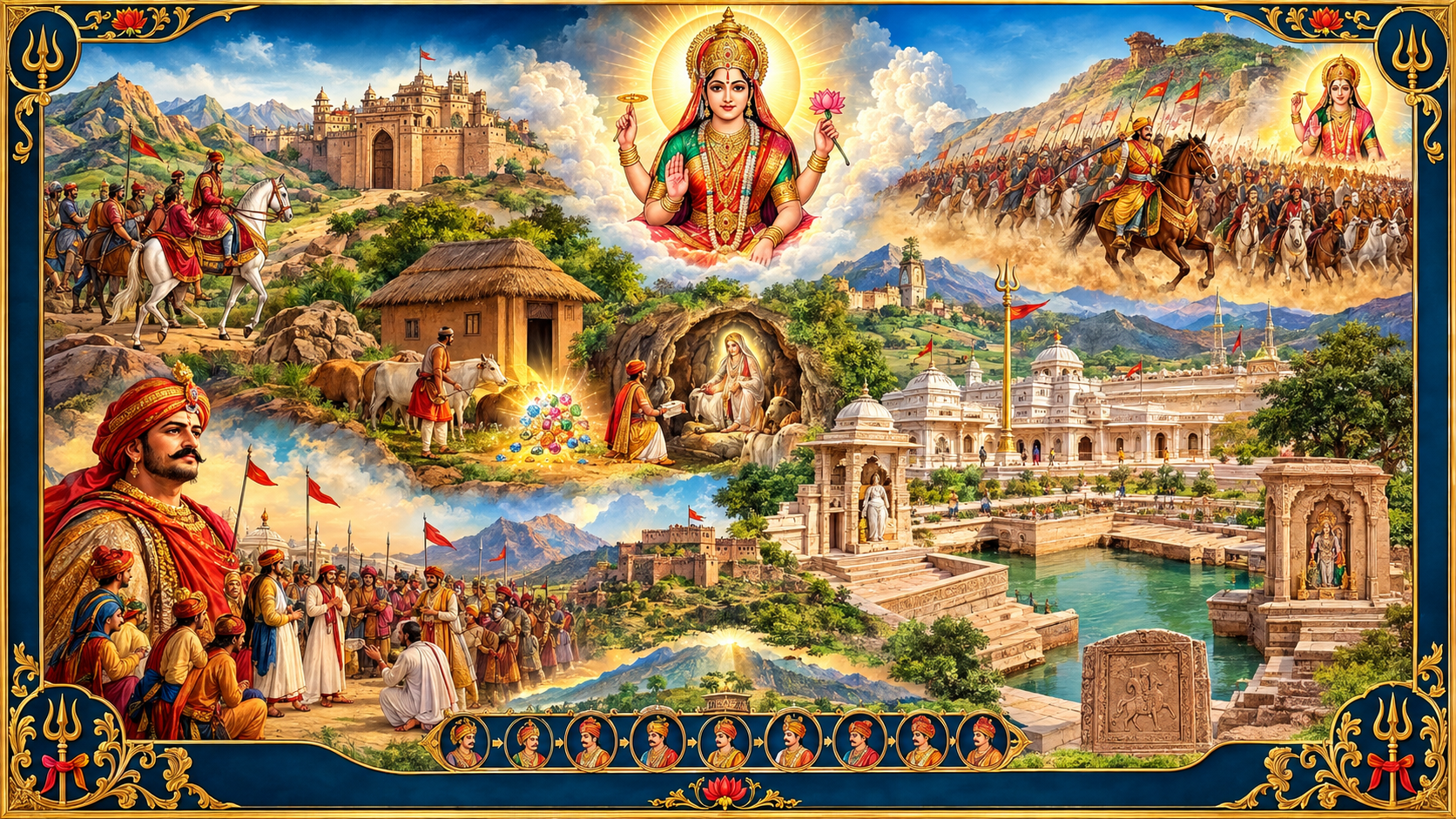
A resolve to build a new kingdom from Sambhar:
After the death of Maharaja Vakpatiraj I, his ambitious son Rao Lakshman decided not to settle for inherited land. He left Sambhar with the firm resolve to establish a new kingdom by his own strength.
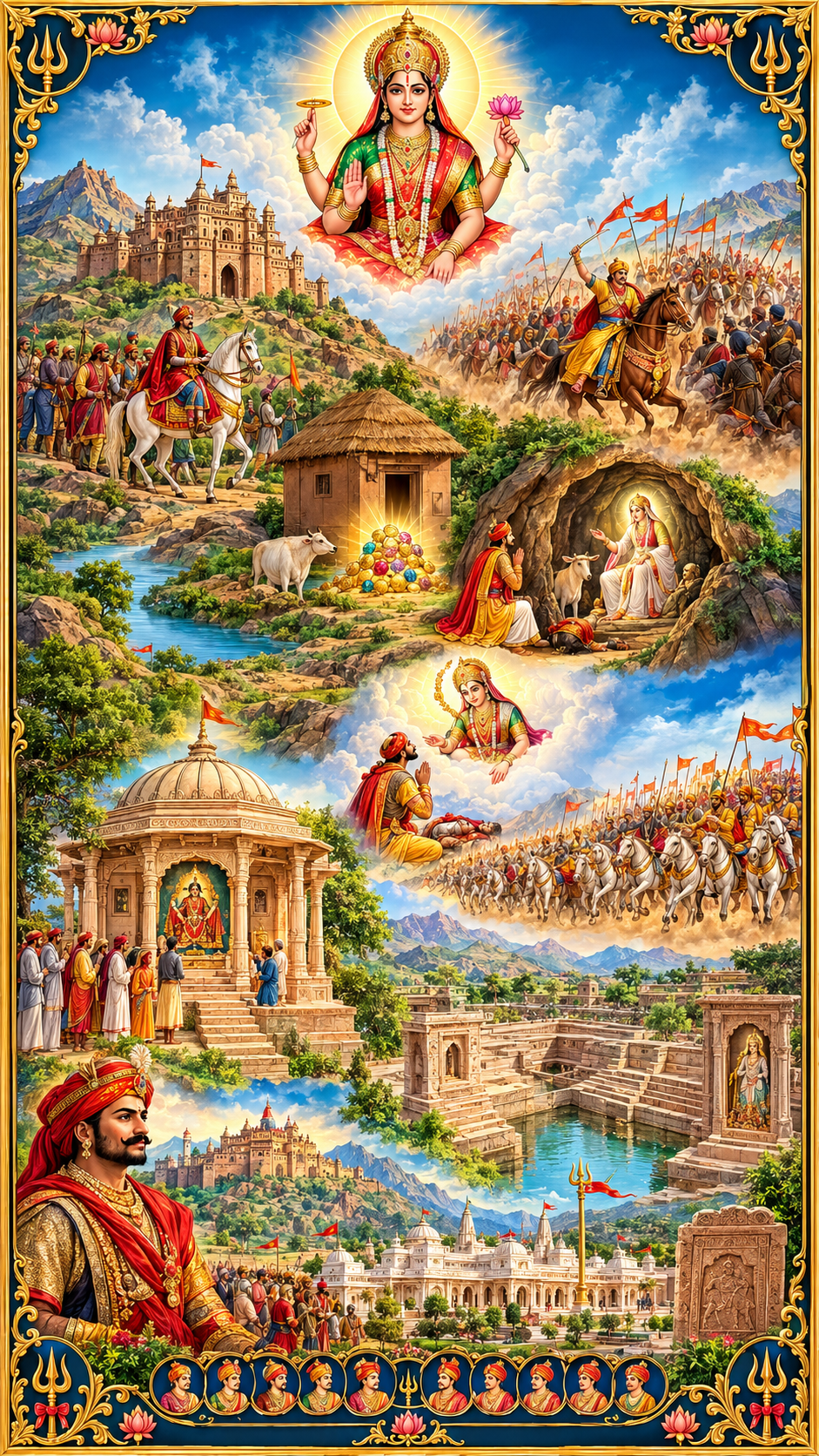
NADOL DHAM
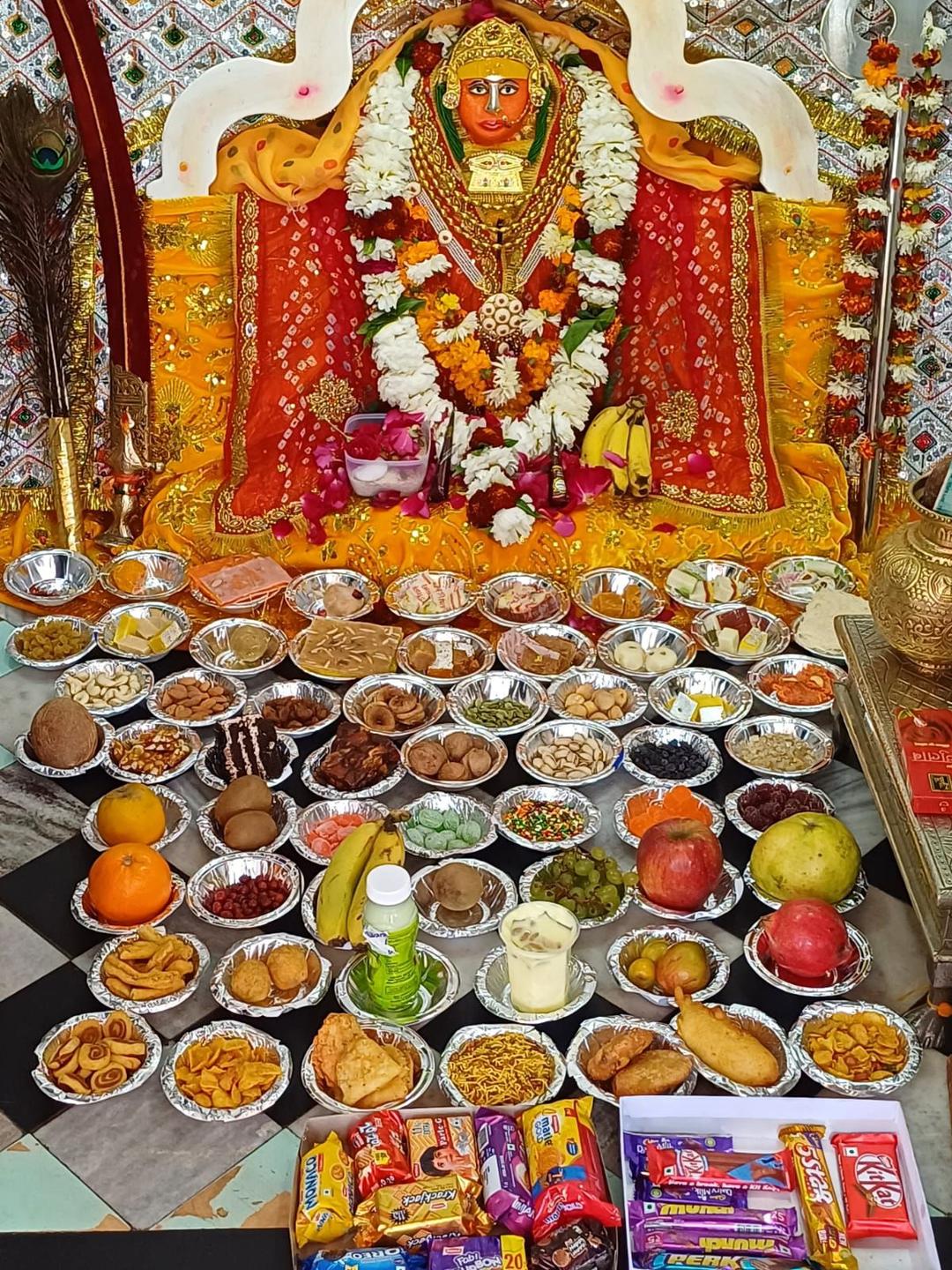
Nadol is not only remembered as a land of valor and ancient rule, but also as the immortal sacred seat where Maa Shakambhari manifested in the revered form of Maa Ashapura. The connection between the Chauhan dynasty and Maa Ashapura stands as a symbol of divine guidance, sacrifice and absolute devotion.
Read the History↓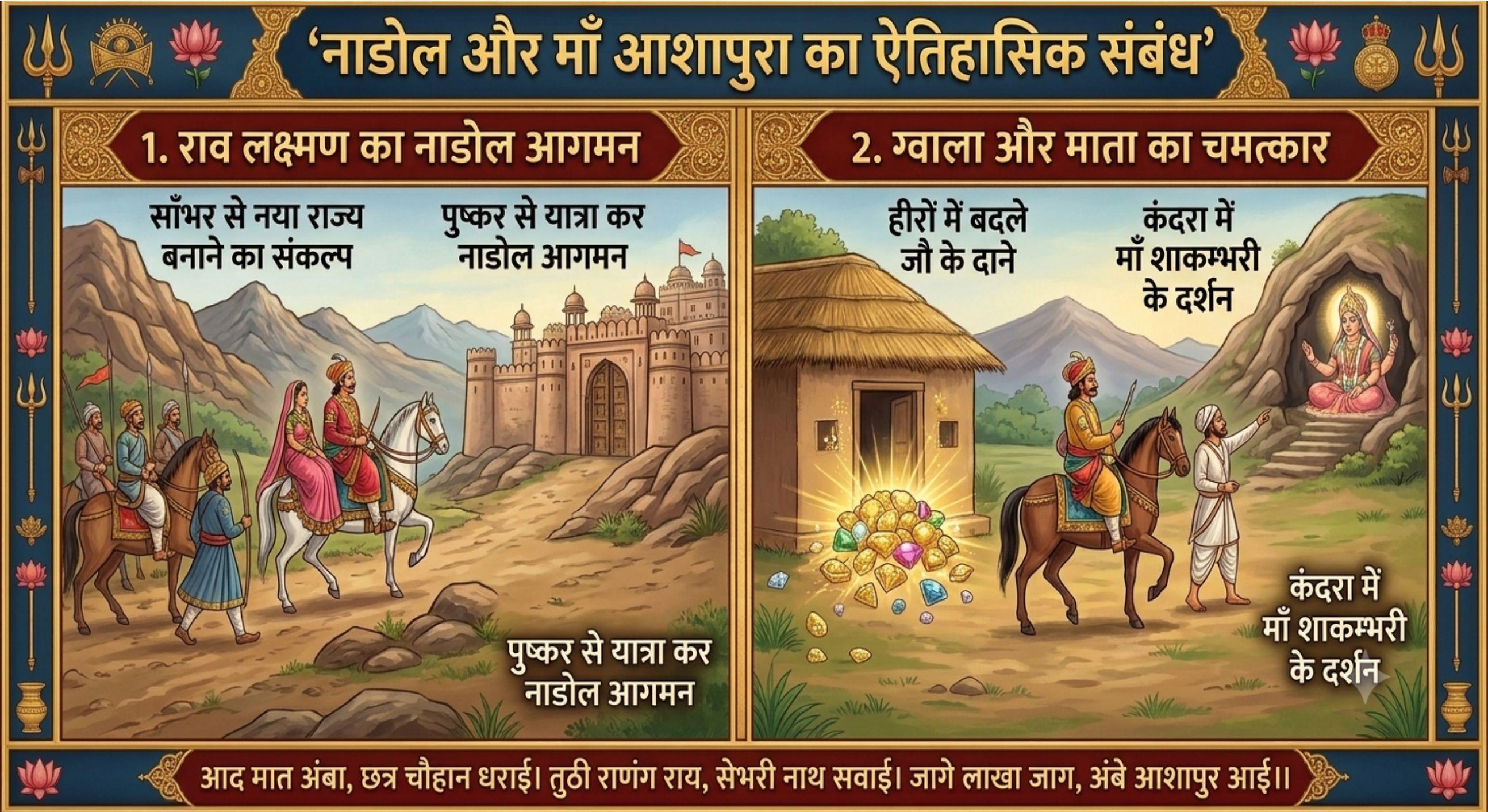
After the death of Maharaja Vakpatiraj I, his ambitious son Rao Lakshman decided not to settle for inherited land. He left Sambhar with the firm resolve to establish a new kingdom by his own strength.
Along with his wife and attendants, he bathed at Pushkar Tirtha and crossed the caves and ridges of the Aravalli to reach Nadol.
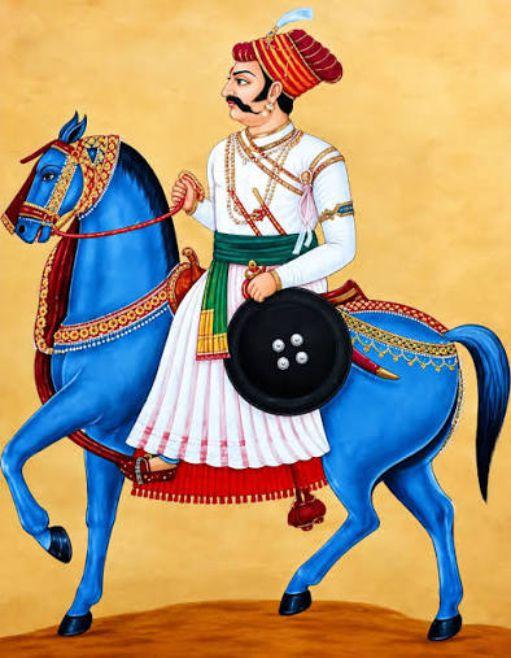
After resting in the temple complex of Neelkanth Mahadev, a priest recognized the royal radiance on Lakshman's face and introduced him to the city minister, who appointed him as Nadol's chief guardian and security head.
During a patrol near the Bharamli river, Rao Lakshman saw the grains of barley stuck to a cowherd's hut shining with divine light and transforming into diamonds.
When Lakshman and the cowherd entered a mountain cave to understand the mystery, an elderly woman milking a cow called out without looking: "Lakshman! Rao Lakshman has arrived, son, come in." Lakshman immediately realized that this old woman was none other than his Kuldevi, the eternal Adi Shakti Maa Shakambhari.
In devotion, Lakshman offered the cowherd's head at the Mother's feet. Pleased by this rare surrender, the Mother revived the cowherd and blessed Lakshman to become a 'Rao' or ruler.
Because the Kuldevi of Sambhar fulfilled the hopes (aas) of her devotee, Rao Lakshman began to call her 'Ashapura' - the one who fulfills hopes. From that moment, Maa Shakambhari became widely known as Maa Ashapura.
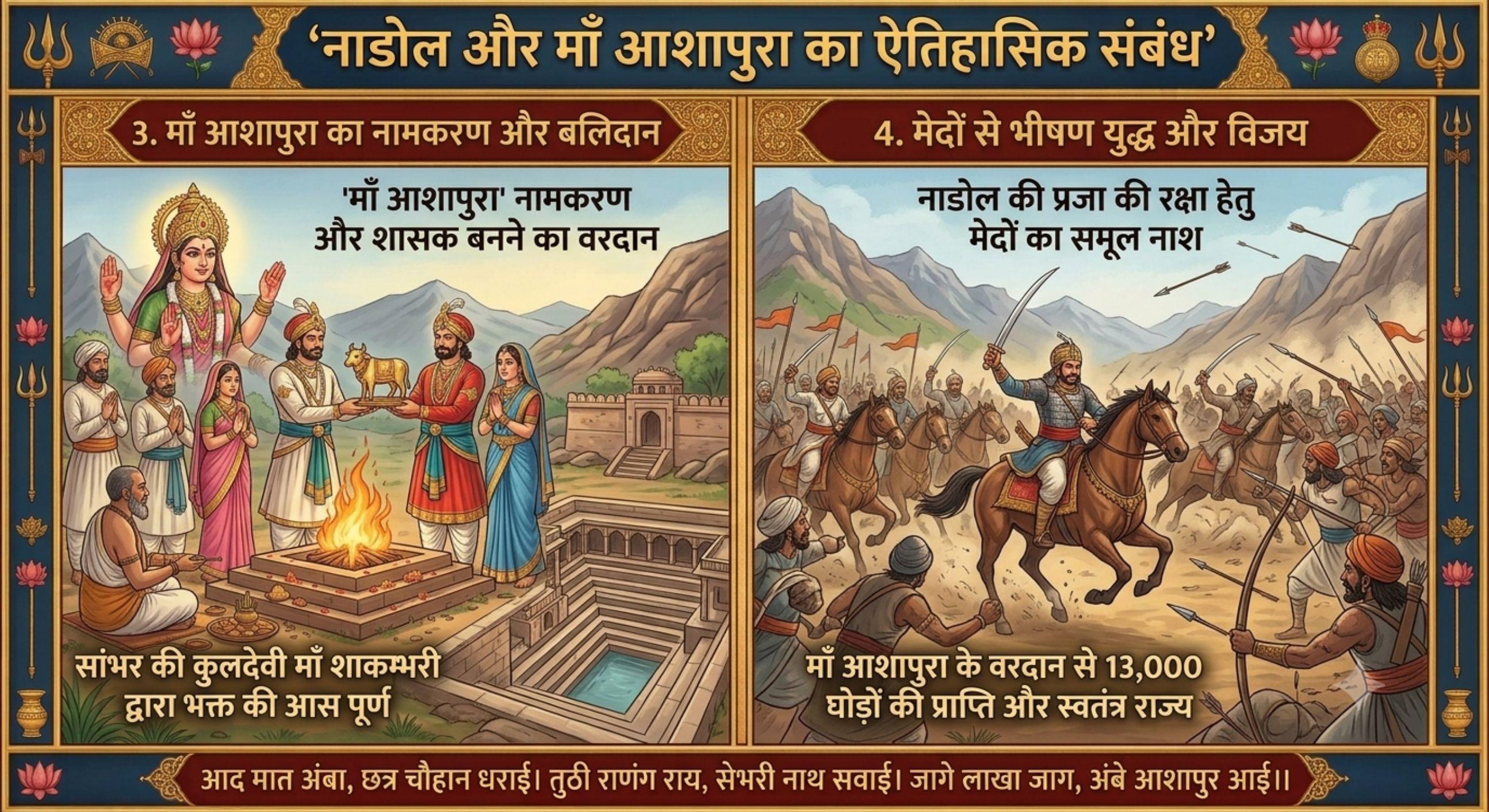
Because of the incapable Chavada ruler, Med looters kept terrorizing the city. With his small troop, Rao Lakshman repeatedly repelled their attacks.
In one brutal conflict Lakshman was seriously wounded. Seeing the sorrow of the people, he prayed to the Mother. She appeared and assured him that soon countless horses would arrive from Malav country, and by sprinkling saffron-mixed water on them, an invincible army should be formed.
The very next day, 13,000 horses arrived, as described by Muhnta Nainsi. Lakshman sprinkled them with saffron water, formed a new invincible army, destroyed the Meds in 960 CE and established an independent Chauhan state in Nadol by removing the unfit ruler Samantsingh Chavada.
On Magsudi Dooj of Vikram Samvat 1038 (981 CE), Rao Lakshman established the first historic seat by installing the four-armed idol of Kuldevi Rajrajeshwari Maa Ashapura Ji on the banks of the Bharamli river.
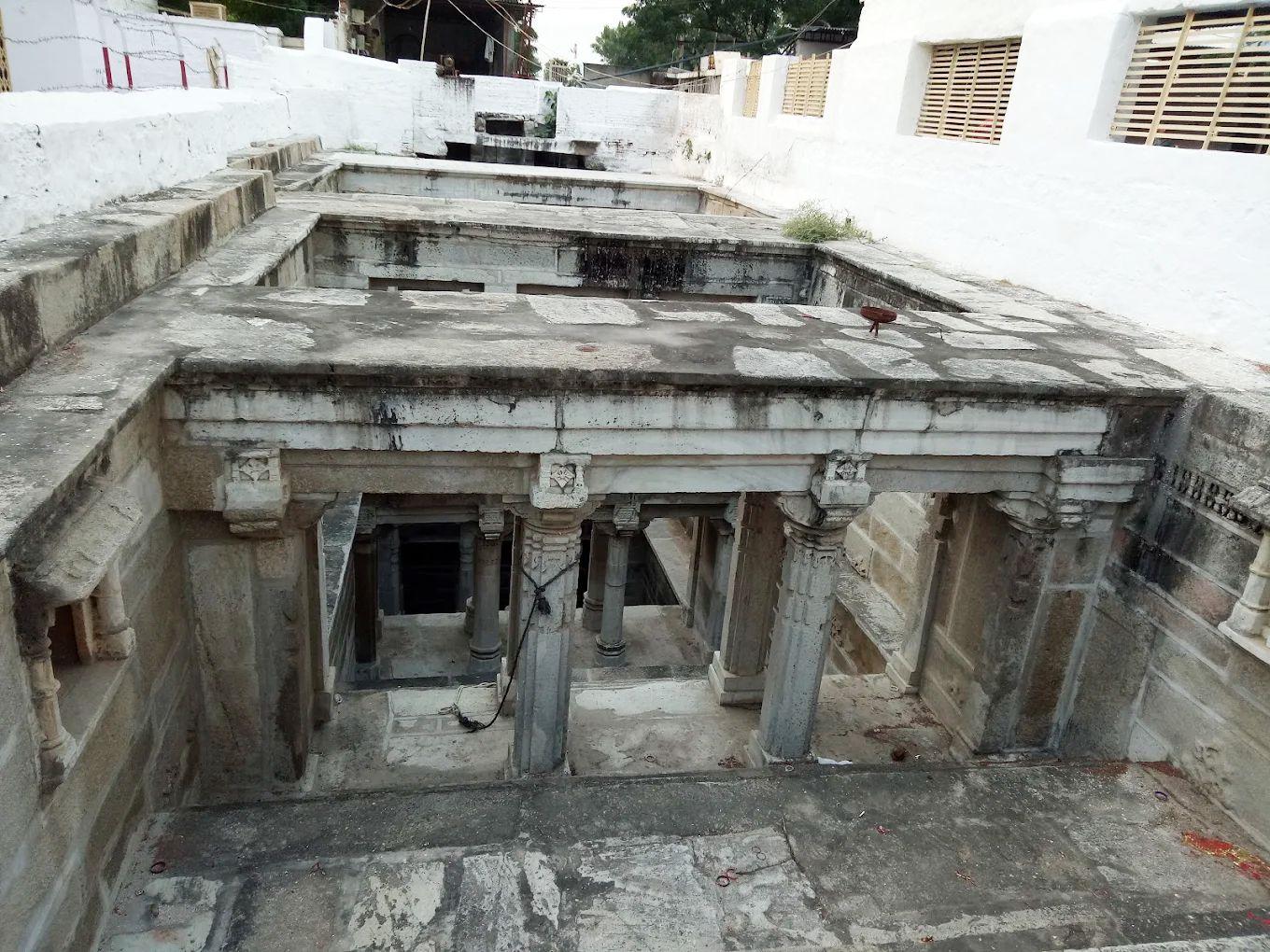
For water security, he also built a beautiful stone-carved stepwell near the temple, which still keeps alive the memory of its noble builder.
Because of Rao Lakshman's valor, inscriptions refer to him as 'Shakambharindra' and 'Shakambhari Manikya'. In later generations, his descendant Rao Aalhan's sons, Kirtipal and Vijaysingh, gave rise to the Songara Chauhan line of Jalore and the Sanchora Chauhan lineage.
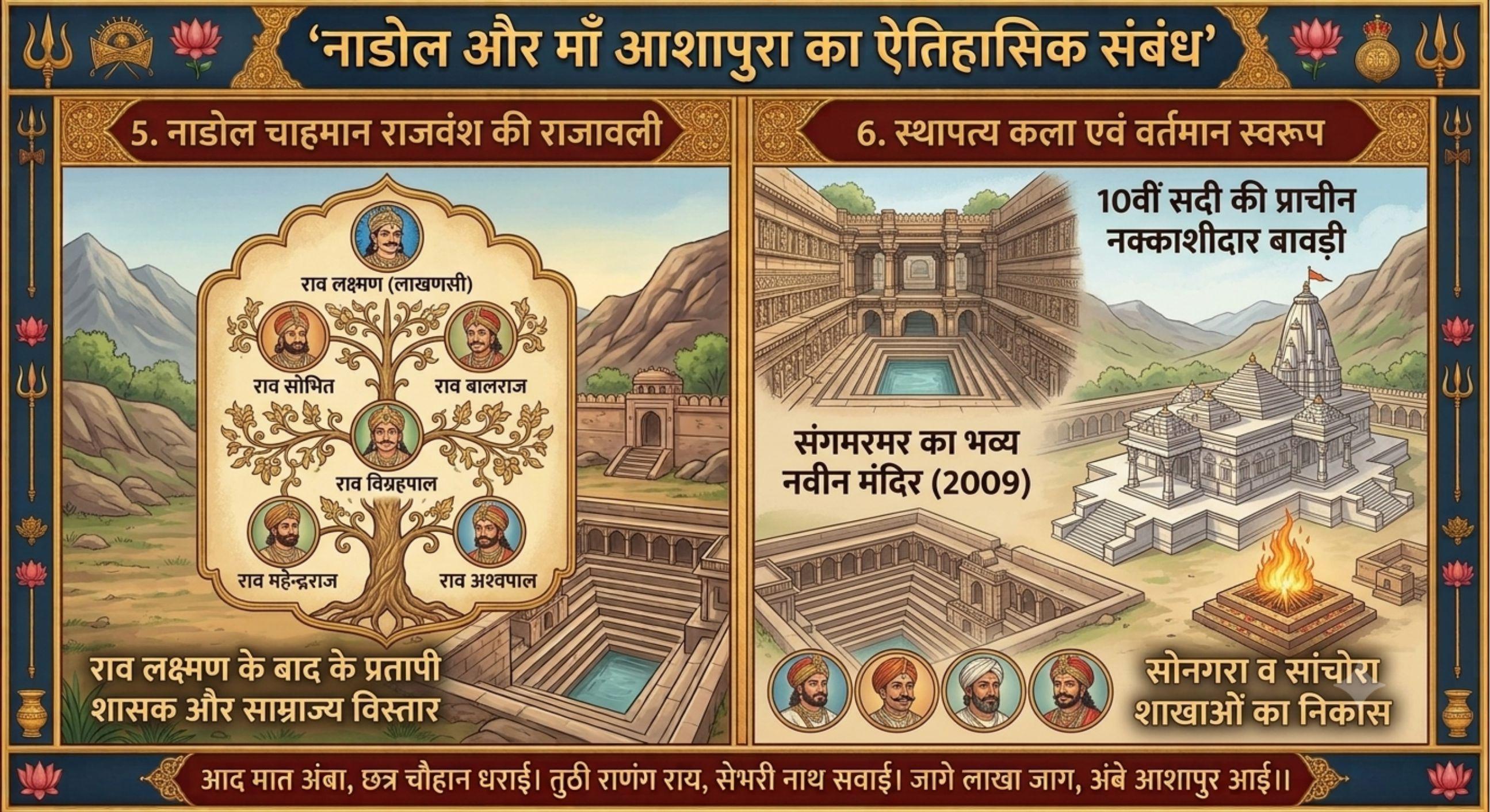
1. Rao Lakhan (960–982 CE) 2. Shobhit 3. Baliraj 4. Vigrahpal 5. Mahendraraj (994–1015 CE) 6. Ashvapal 7. Anhilraj (1024–1055 CE) 8. Balaprasad (1055–1070 CE) 9. Jendraraj (1070–1080 CE) 10. Prithvipal (1080–1090 CE) 11. Jojaldeva (1090–1110 CE) 12. Asraj (1110–1119 CE) 13. Ratnapal (1119–1132 CE) 14. Raypal (1132–1145 CE) 15. Sahajpal (1145–1148 CE) 16. Aalhan (1148–1163 CE) 17. Kelhan (1163–1193 CE) 18. Jayantsingh (1193–1197 CE) 19. Samantsingh (1197–1202 CE)
The sons of Aalhan, Kirtipal and Vijaysingh, later founded the Songara and Sanchora Chauhan branches.
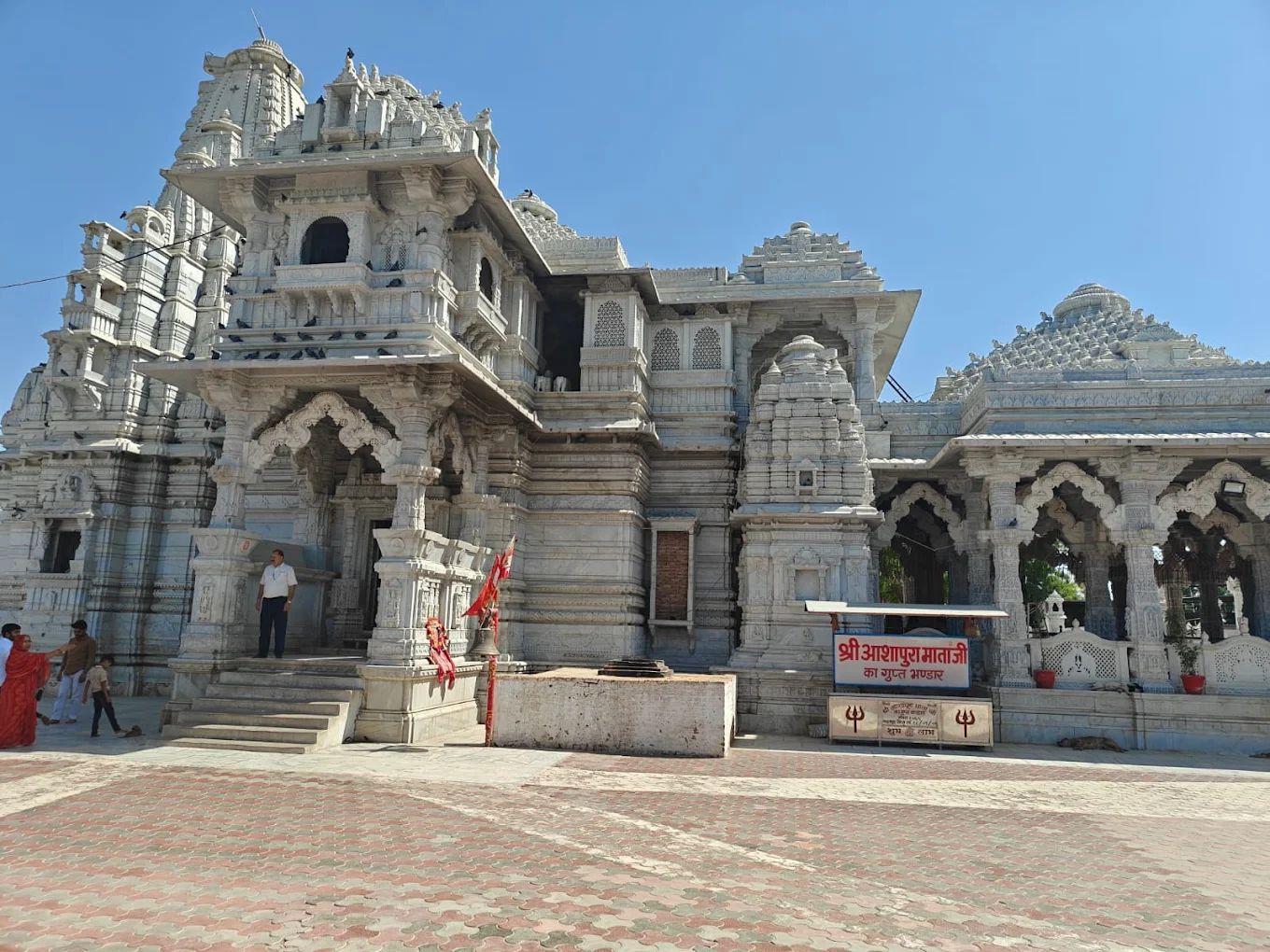
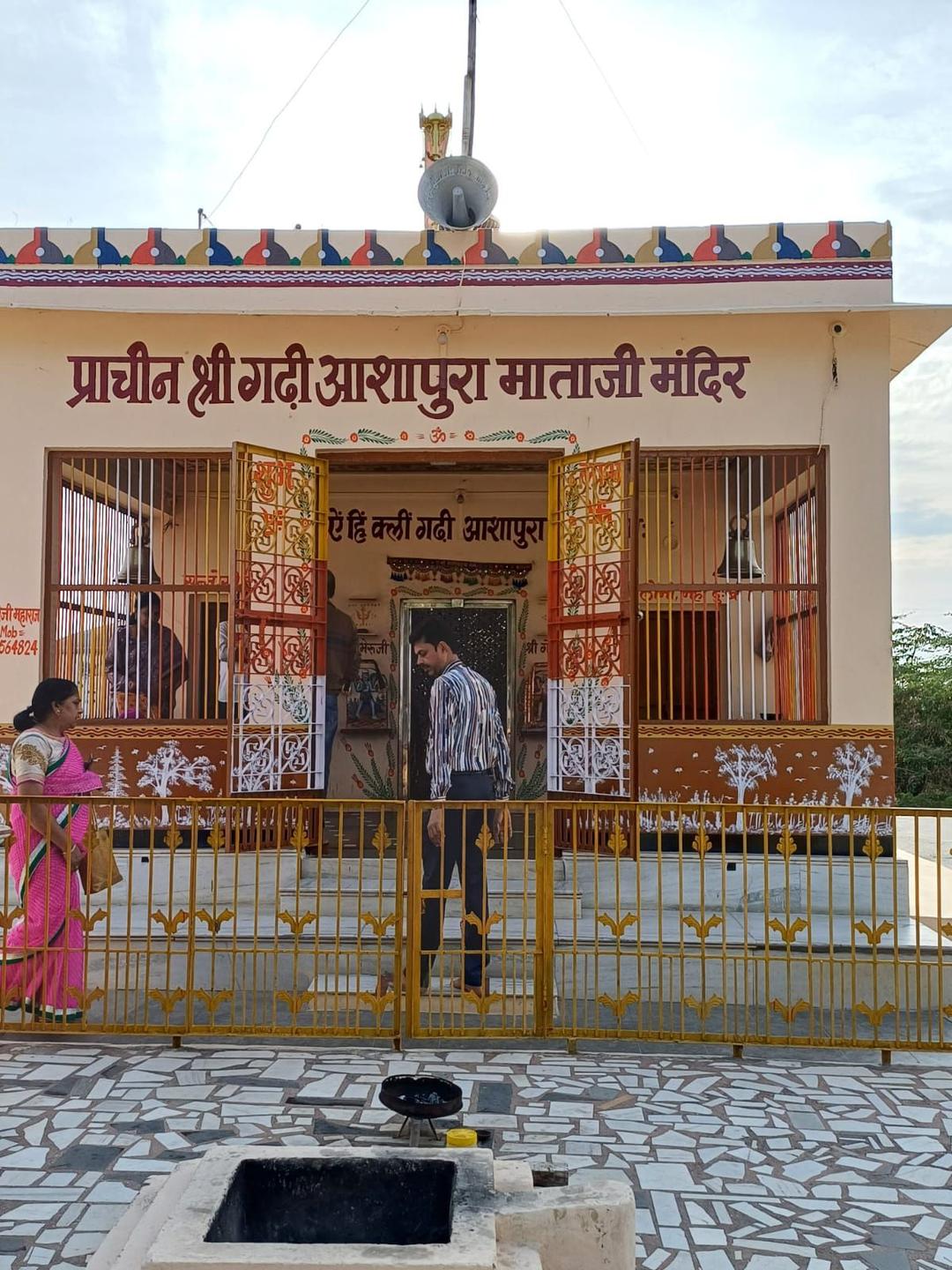
While preserving the original sanctum built by 10th-century Rao Lakshman, the temple trust has built a grand marble temple in the present era.
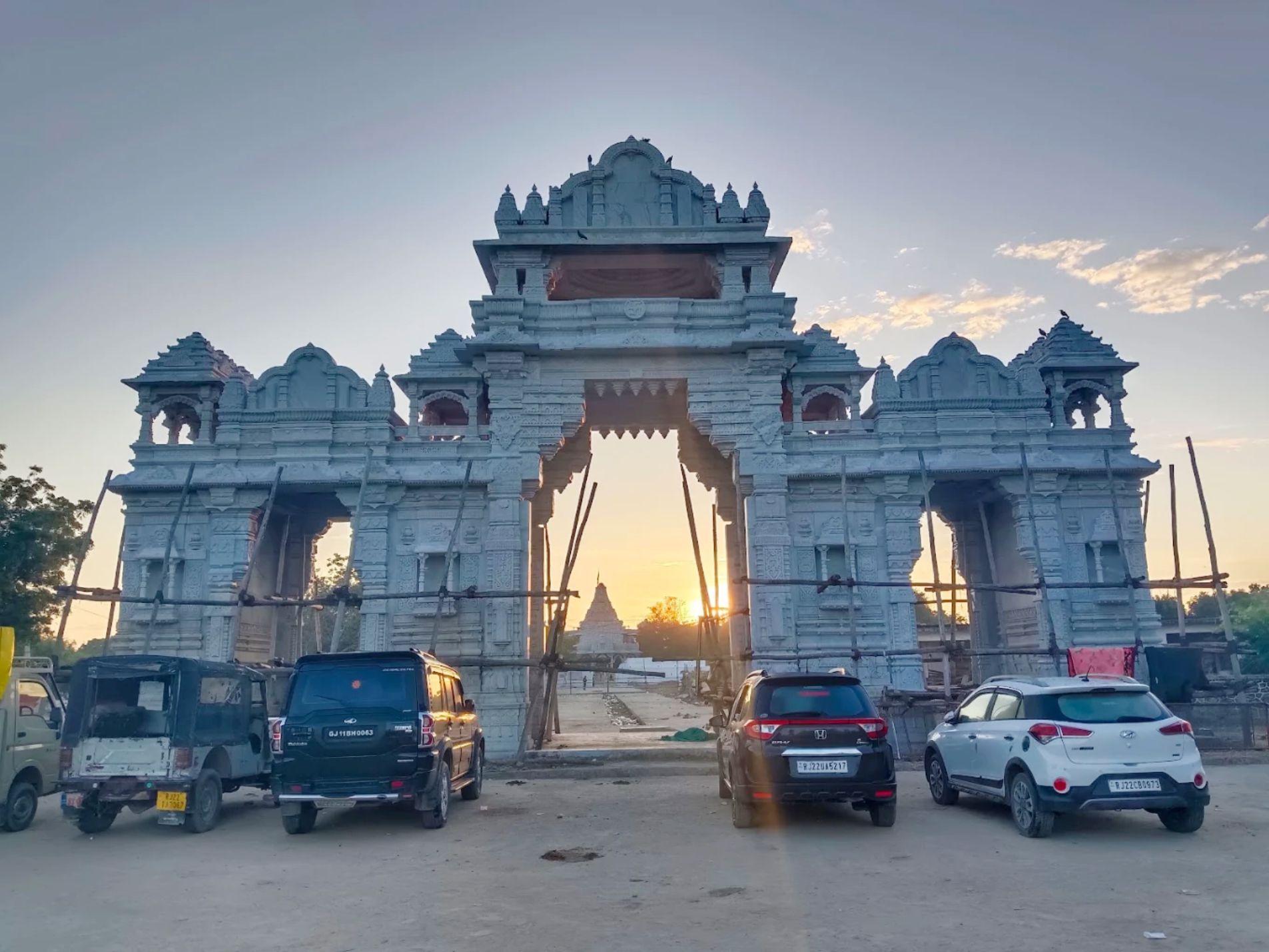
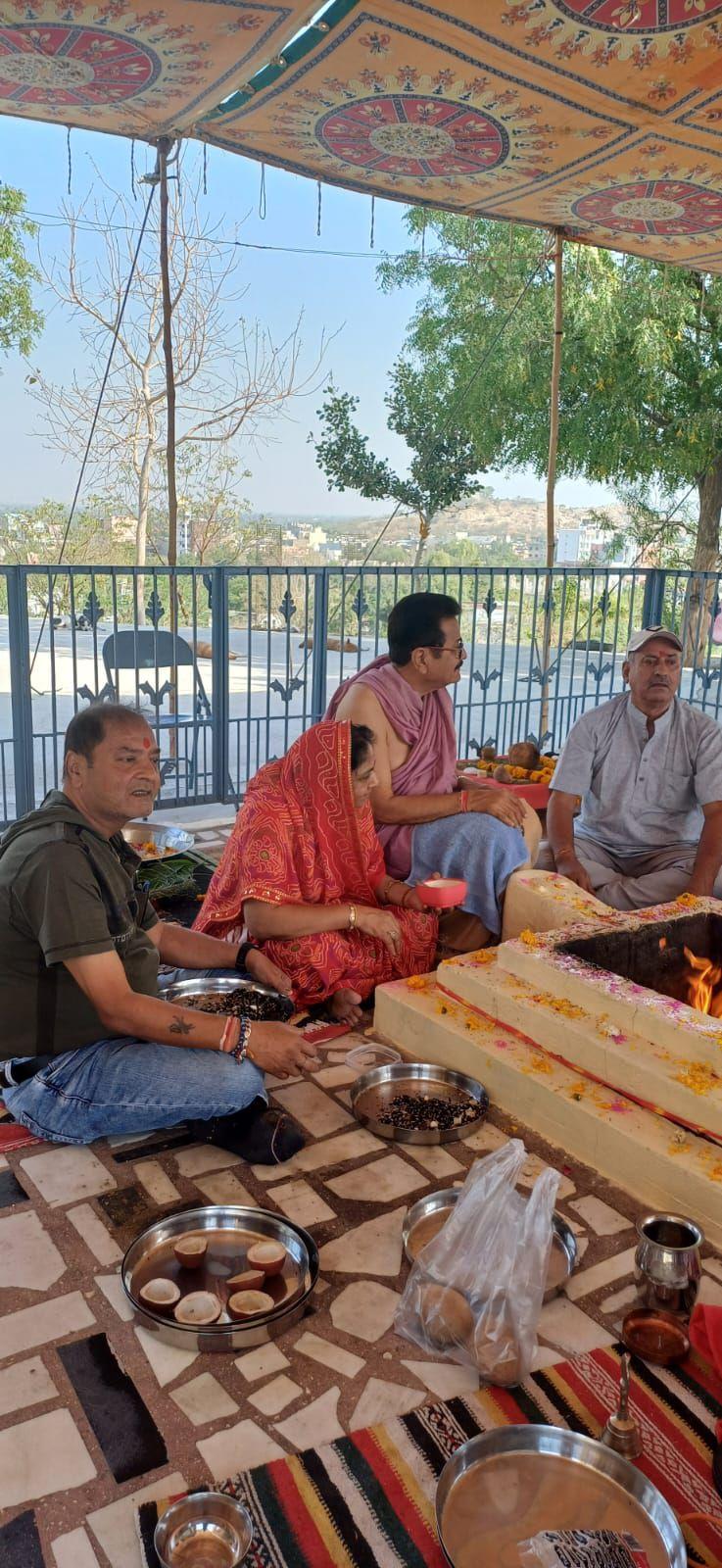
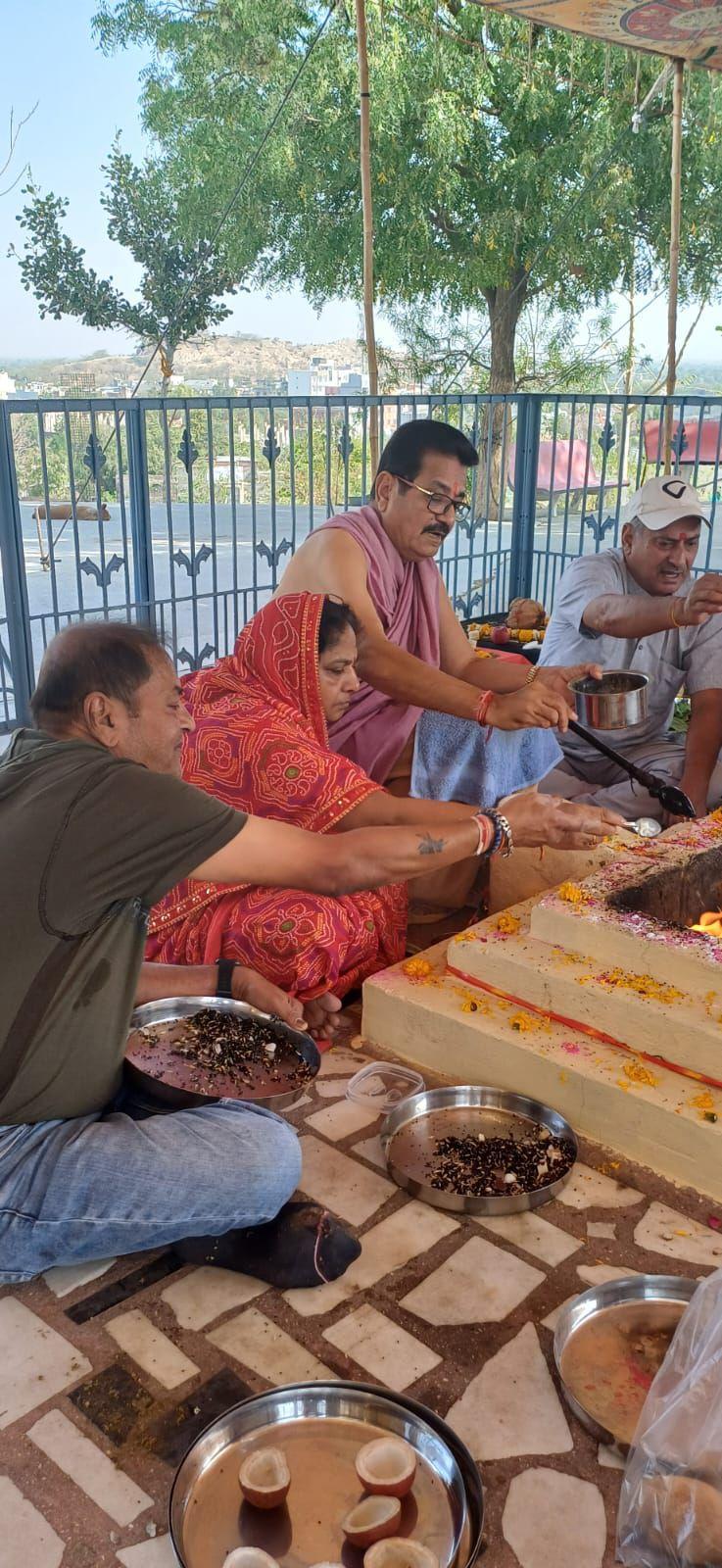
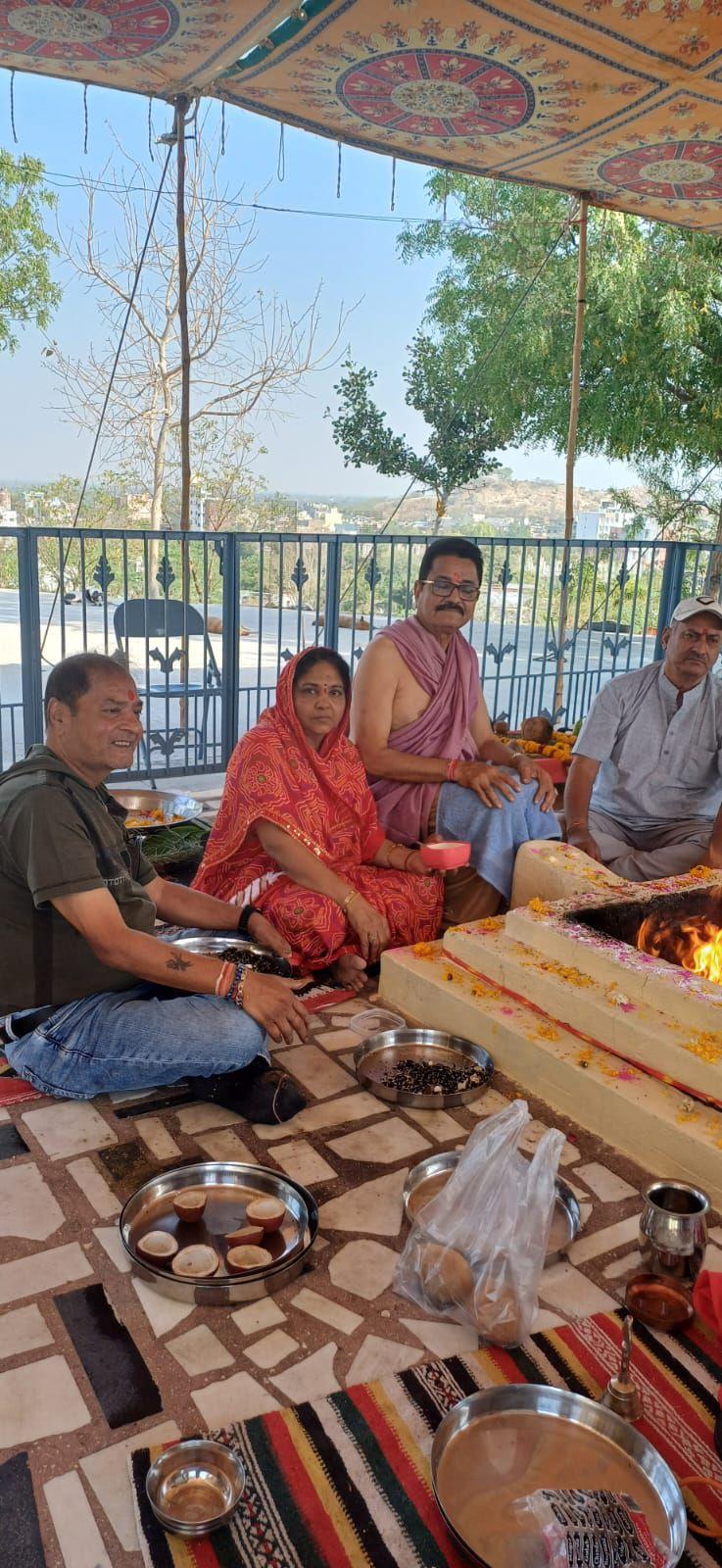
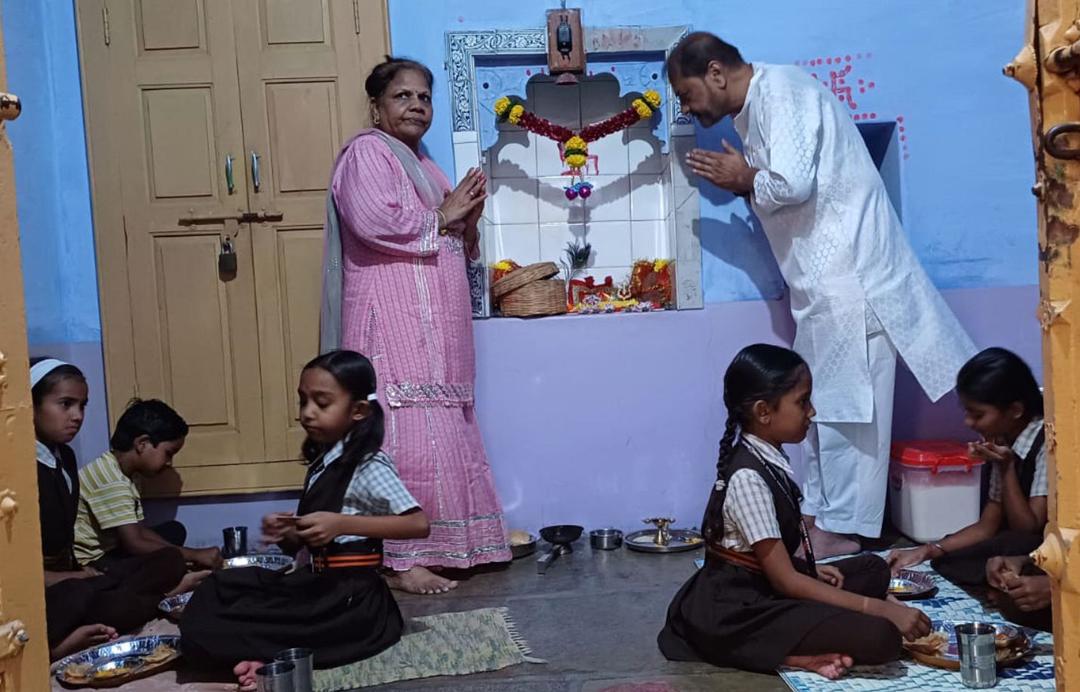
The complex includes a vast courtyard, yagyashala, a 51-foot trishul, a rest house and a large community dining hall.
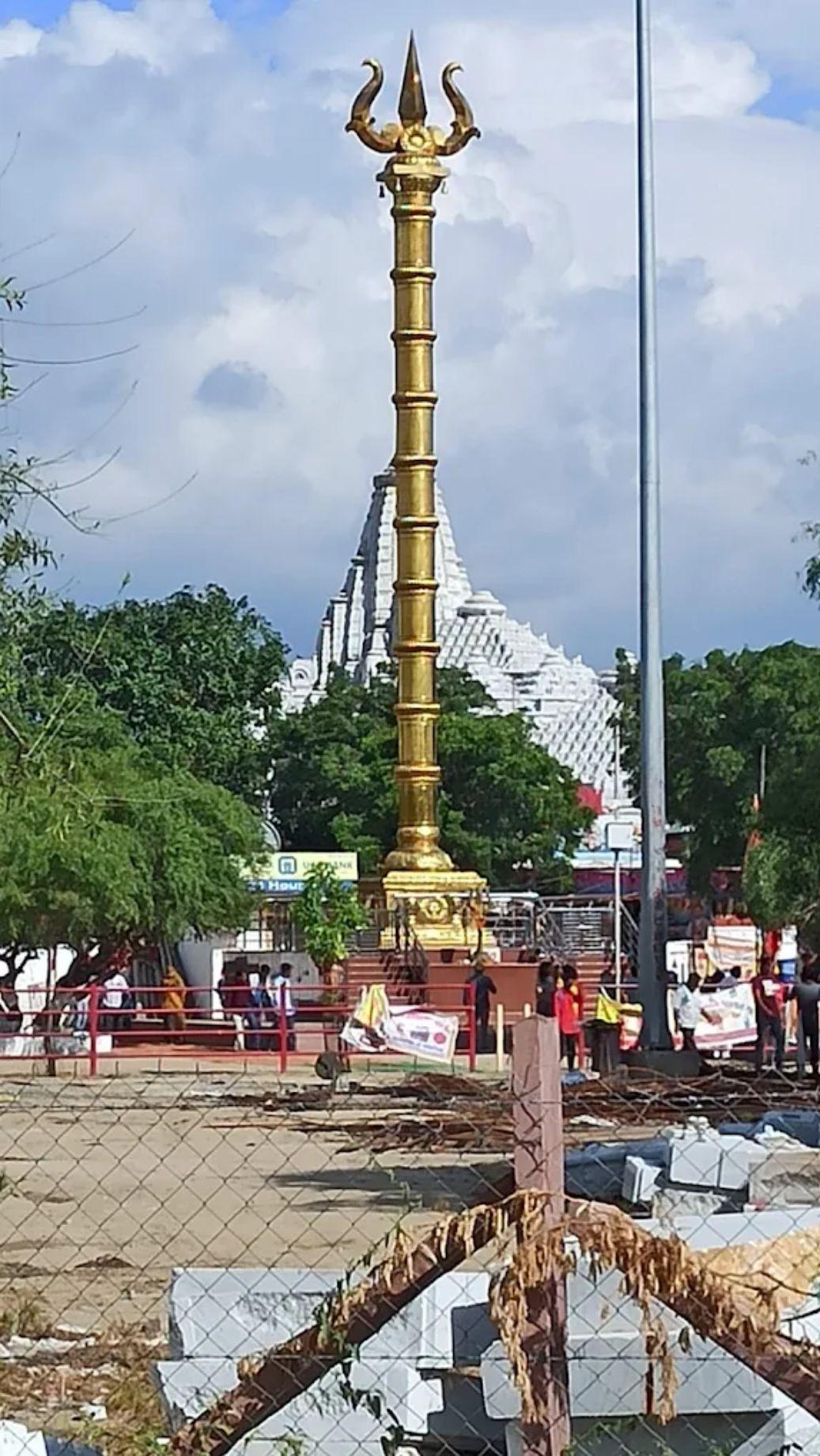
Inside the complex lies the 10th-century stepwell, at whose entrance stands the sacred image of Ganga Mata, symbolizing purity and water sanctity.
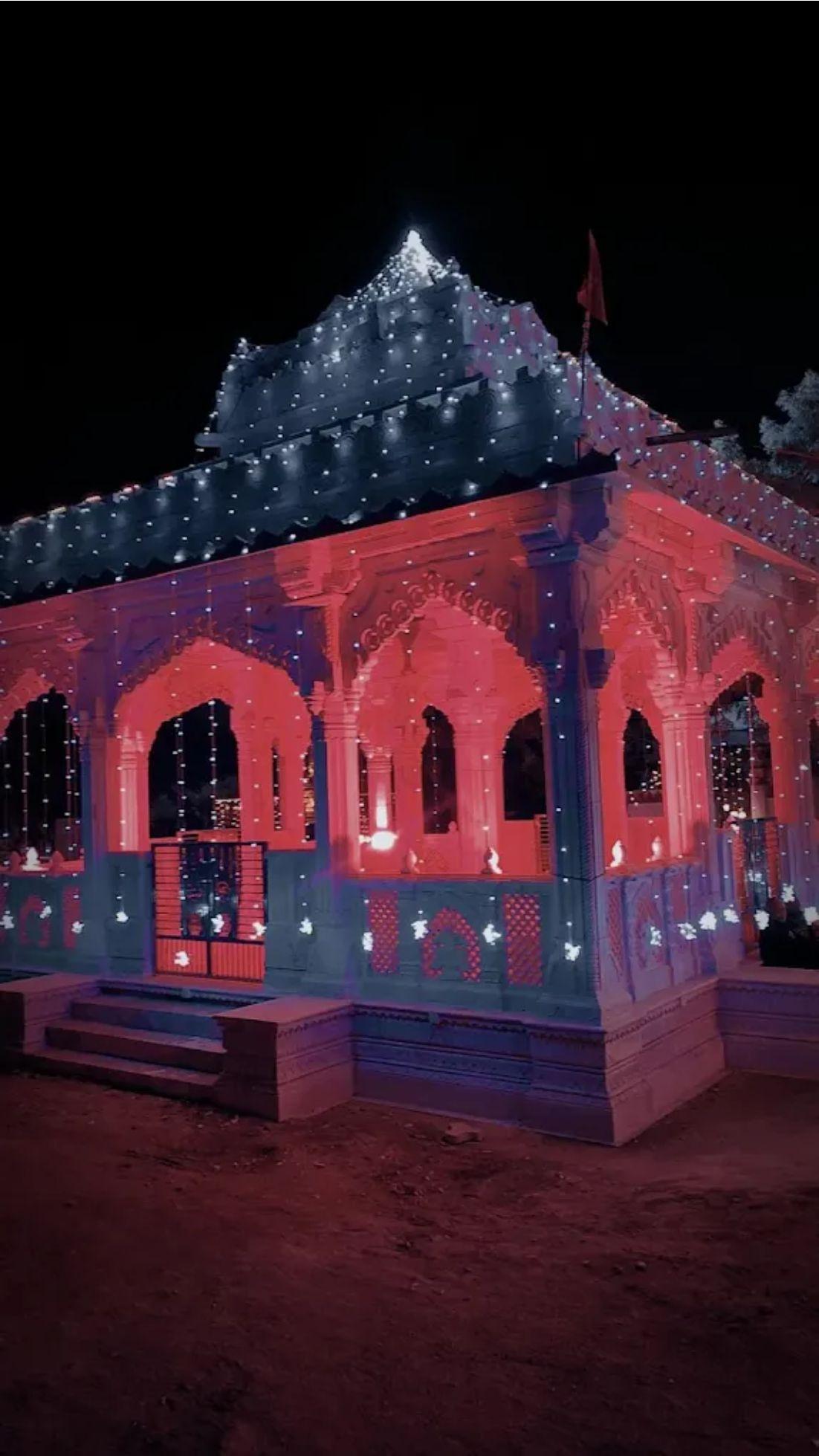
Right in front of the main temple stands the engraved memorial of Rao Lakhan Ji, dated Samvat 1790 (1733 CE), honoring his devotion and unmatched contribution.
The shared tradition of Nadol and Jalore shows how devotion to the Kuldevi brought royal duty, war, sacrifice and miracles together into a single historical tradition.
Before the Chauhans, Jalore Fort was ruled by the Parmars. At that time, a temple of Maa Shakambhari stood on Jalore Fort. After the end of Parmar rule, Kanhaddev came to power.
During the war, when a traitorous soldier placed the entire army and fort in danger, Kanhaddev (Veeramdev) prayed to the Mother for the strength to protect the temple.
The Mother appeared before him and assured him that his lineage, fort and temple would all be saved. She also said that she would take her second incarnation among the 52 Shakti Peethas, and that this second incarnation would be known as 'Maa Ashapura'.
When the Mother left Jalore Fort and came to Sandai Hill, she became known there as Maa Ashapura (Maa Joker). Later, when the Mother arrived at the fort of Nadol village, the place came to be known as 'Gadhi Maa Ashapuri'.
The tradition of Nadol, Jalore and Sandai Hill continues to connect devotees with the wider historical journey of the Kuldevi, where miracles, protection and unwavering devotion remain intertwined.
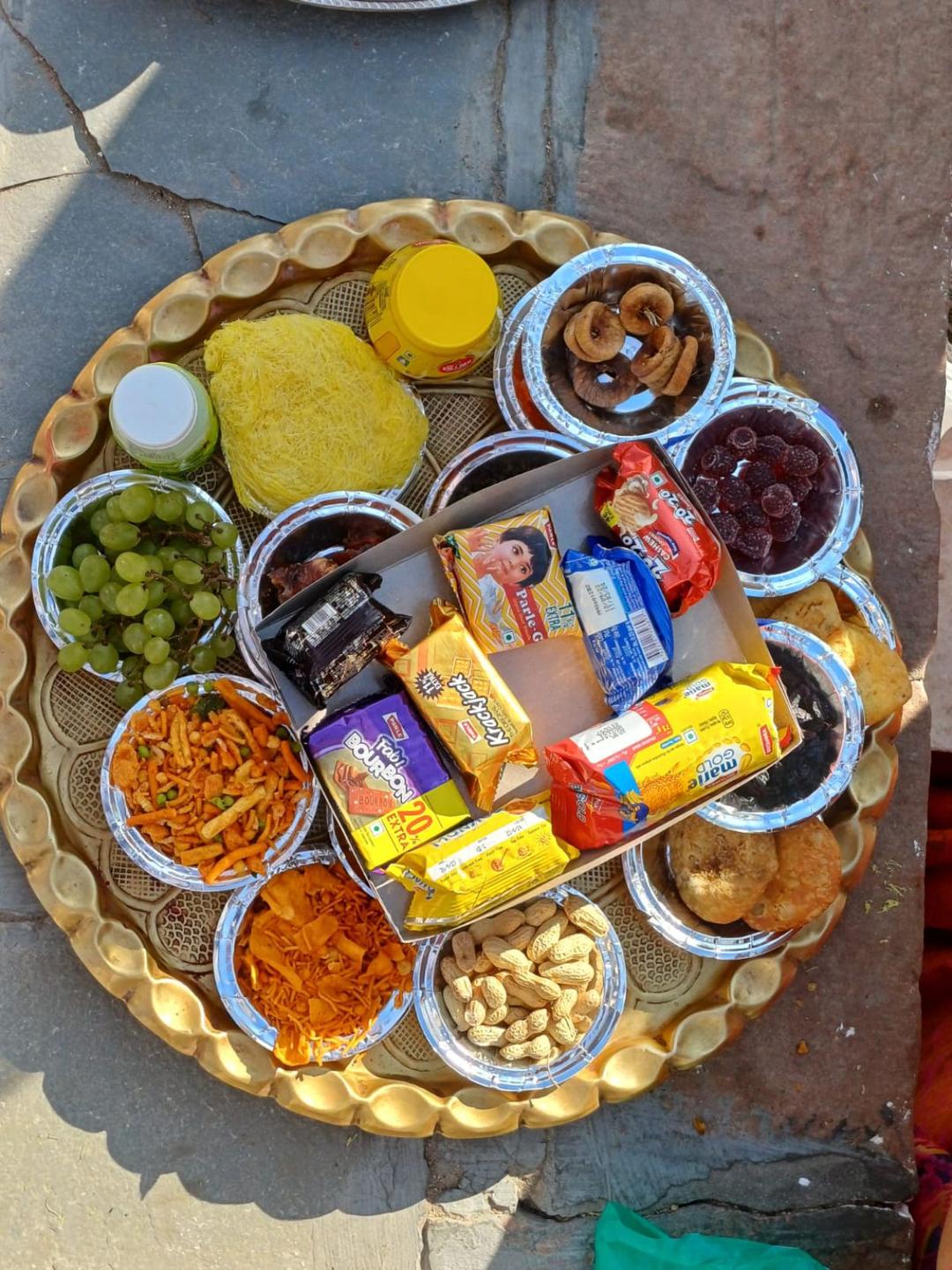
Some dreams are not seen with closed eyes, but with eyes wide open.
I envisioned one such dream nearly eight years ago—when a thought came to my mind to create the Shrimad Bhagavad Gita in a unique form, unlike anything ever seen before.
To bring this vision to life, I made countless efforts from China to Mumbai. I knocked on many doors; many times hope arose, and many times disappointment followed.
There came a time when it felt as though this dream might never come true. Yet, my heart refused to give up.
Then suddenly, a path opened up, and a dream of years was finally realized.
With all these special features, this Shrimad Bhagavad Gita could only be produced in a limited edition of just 11 Copies.
Looking back today, I realize—the efforts were mine, but the path was shown by the Divine.
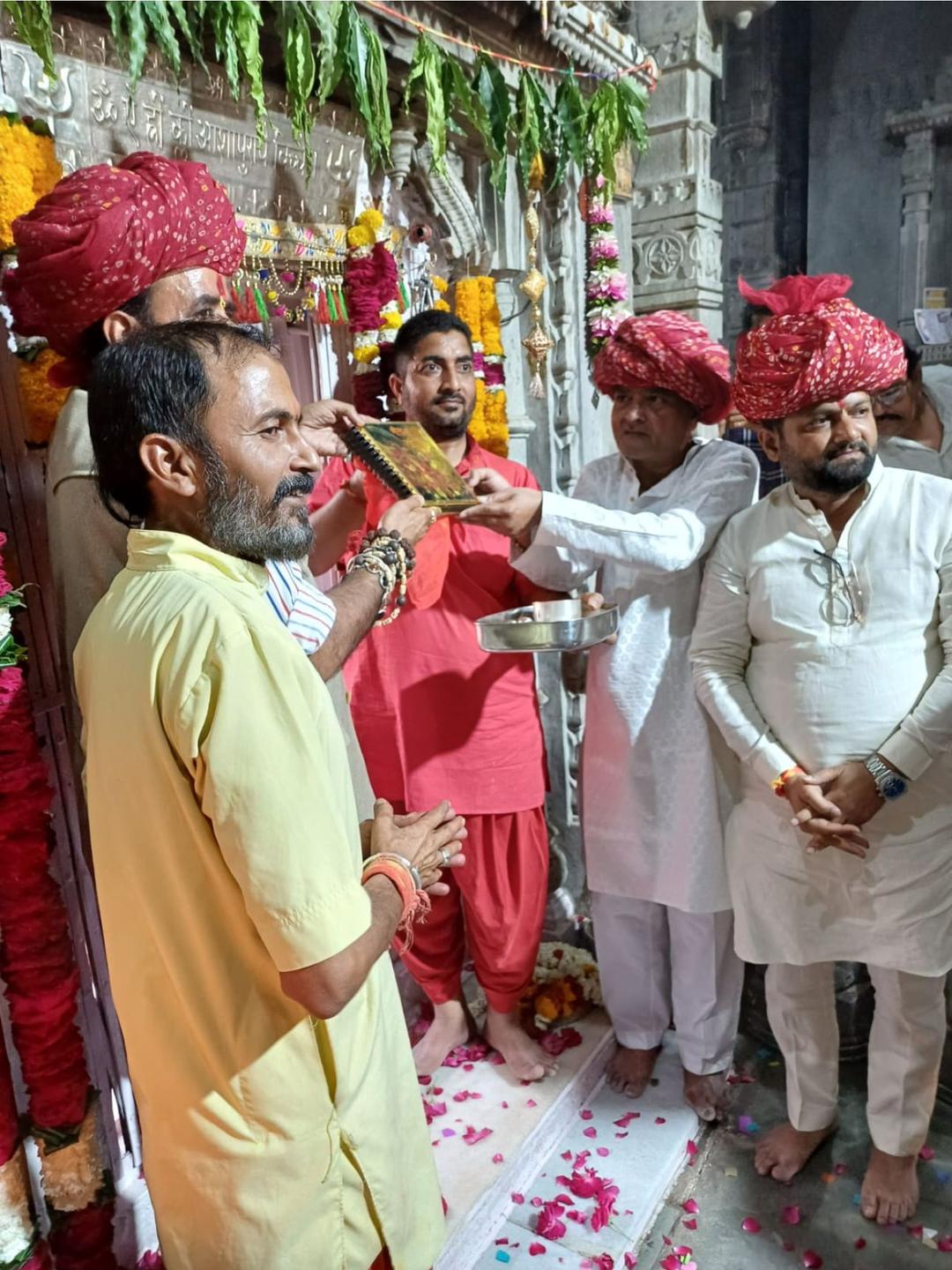
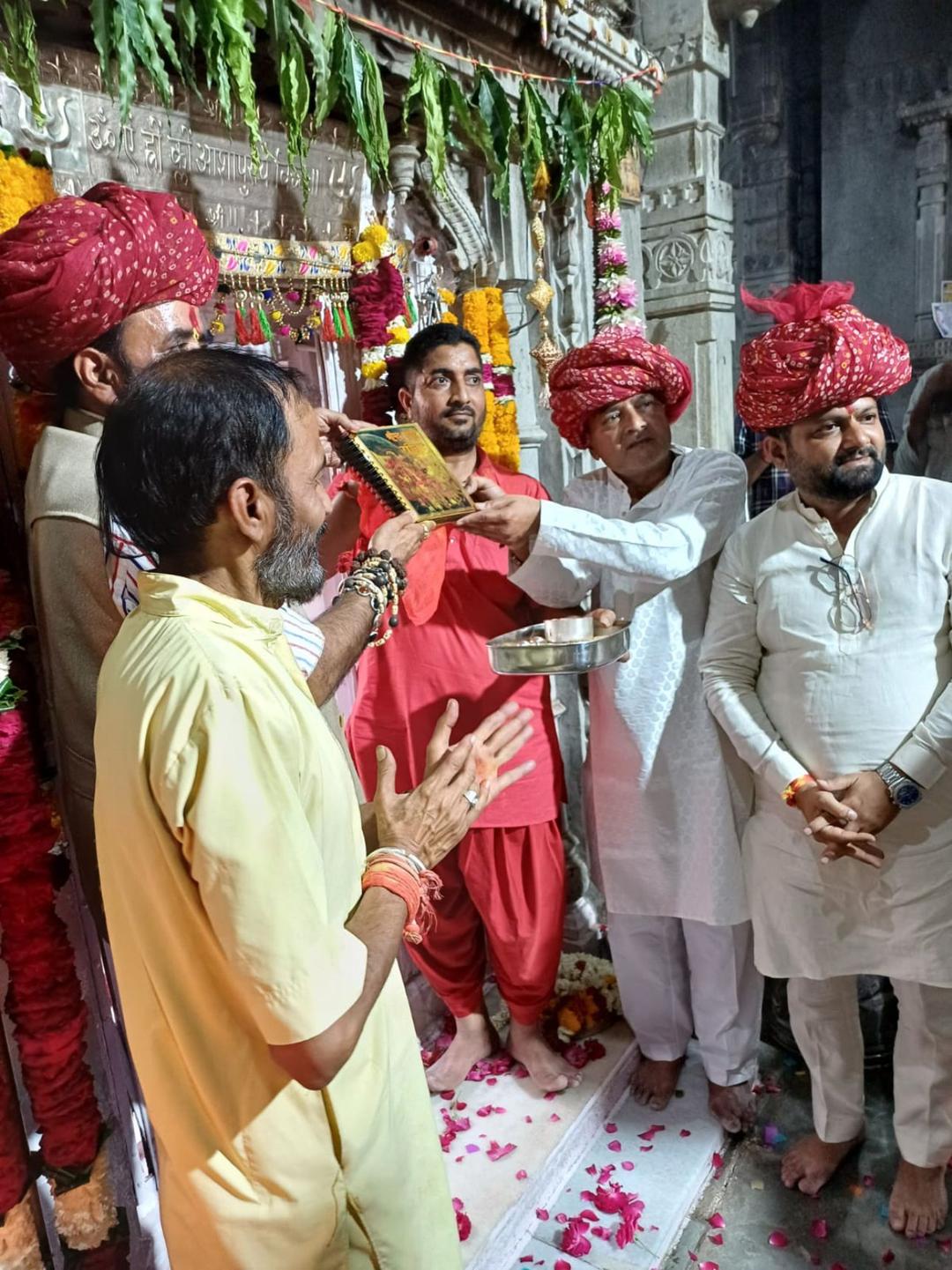
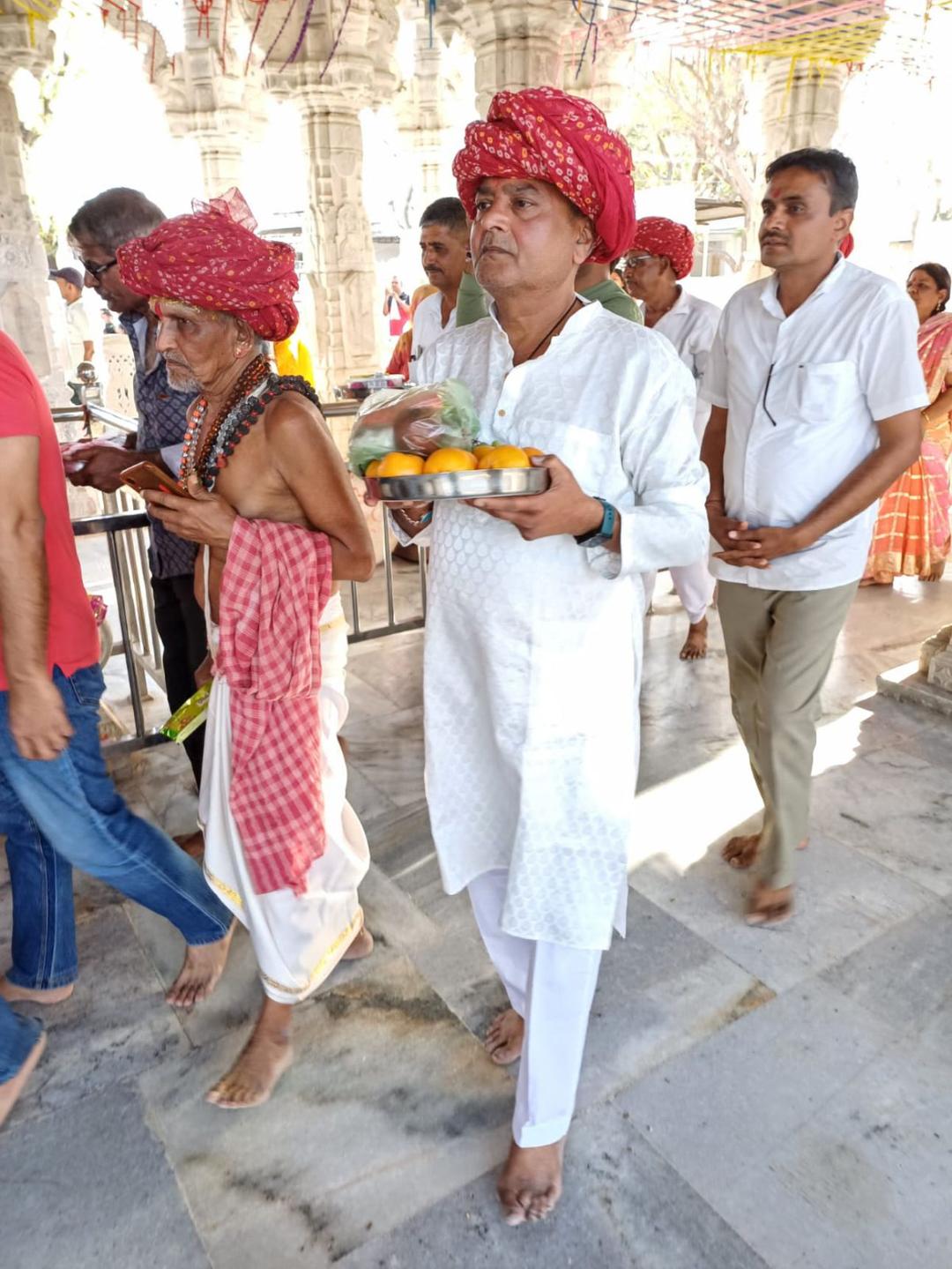
Offering one of these copies at the feet of my Kuldevi, Maa Ashapura, remains one of the most emotional and sacred moments of my life.
Thousands expressed their desire to receive this sacred book, but because there were only 11 copies, I had to politely decline most of them—something I deeply regret to this day.
For me, this book is not merely an object made of paper and words. It embodies eight years of my dreams, my hard work, my disappointments, my patience, my devotion, and the bountiful blessings of Maa Ashapura.
Sometimes in life, certain events occur that cannot be explained in words, only felt deep within. For me, this is that very moment.
Whether I call it a miracle or the dream of my life, I know one thing for certain—after this experience, my faith and devotion toward Maa Ashapura have grown deeper and stronger than ever before.
🙏🏻 Bowings and countless reverences at the feet of Maa Ashapura.
🙏🏻 Jai Maa Ashapura!
🙏🏻 Jai Shrimad Bhagavad Gita!
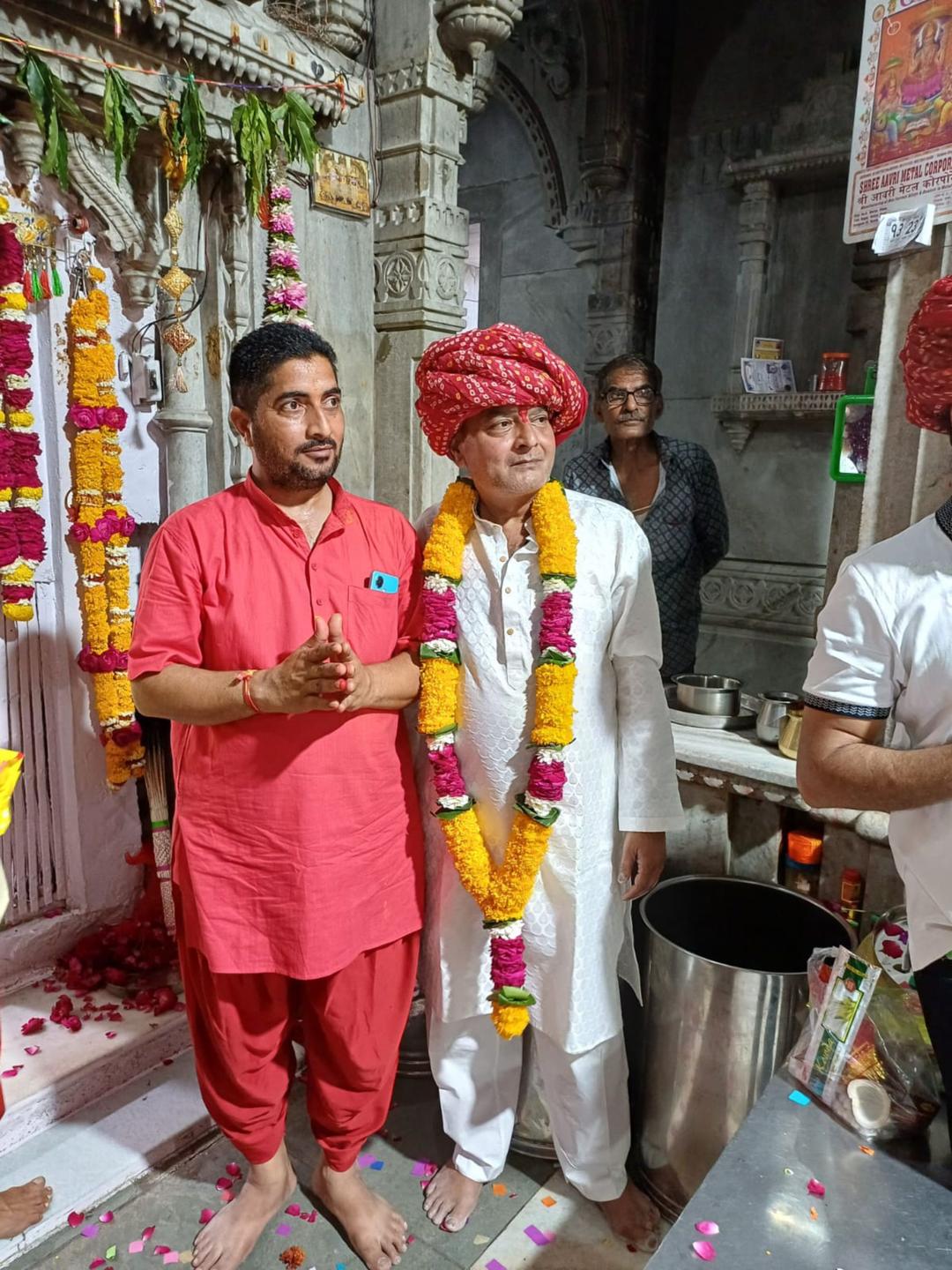
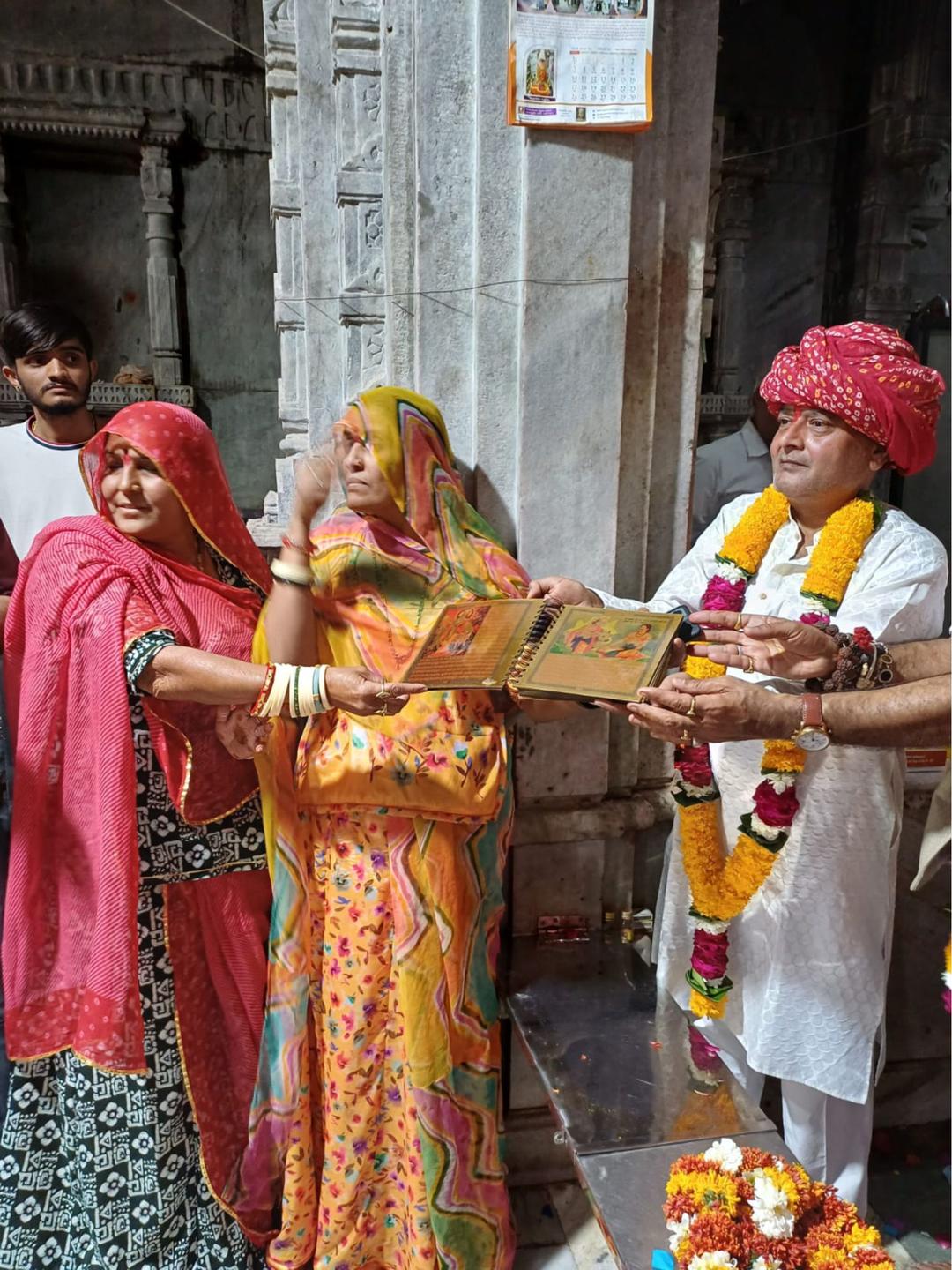
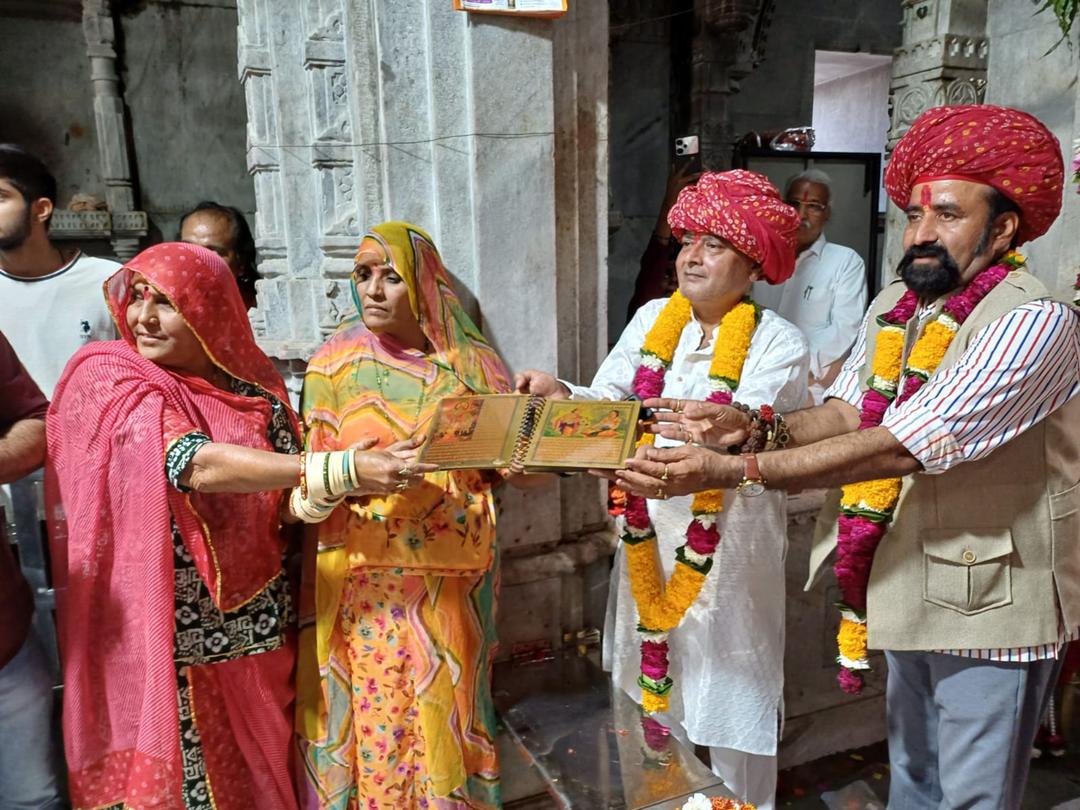
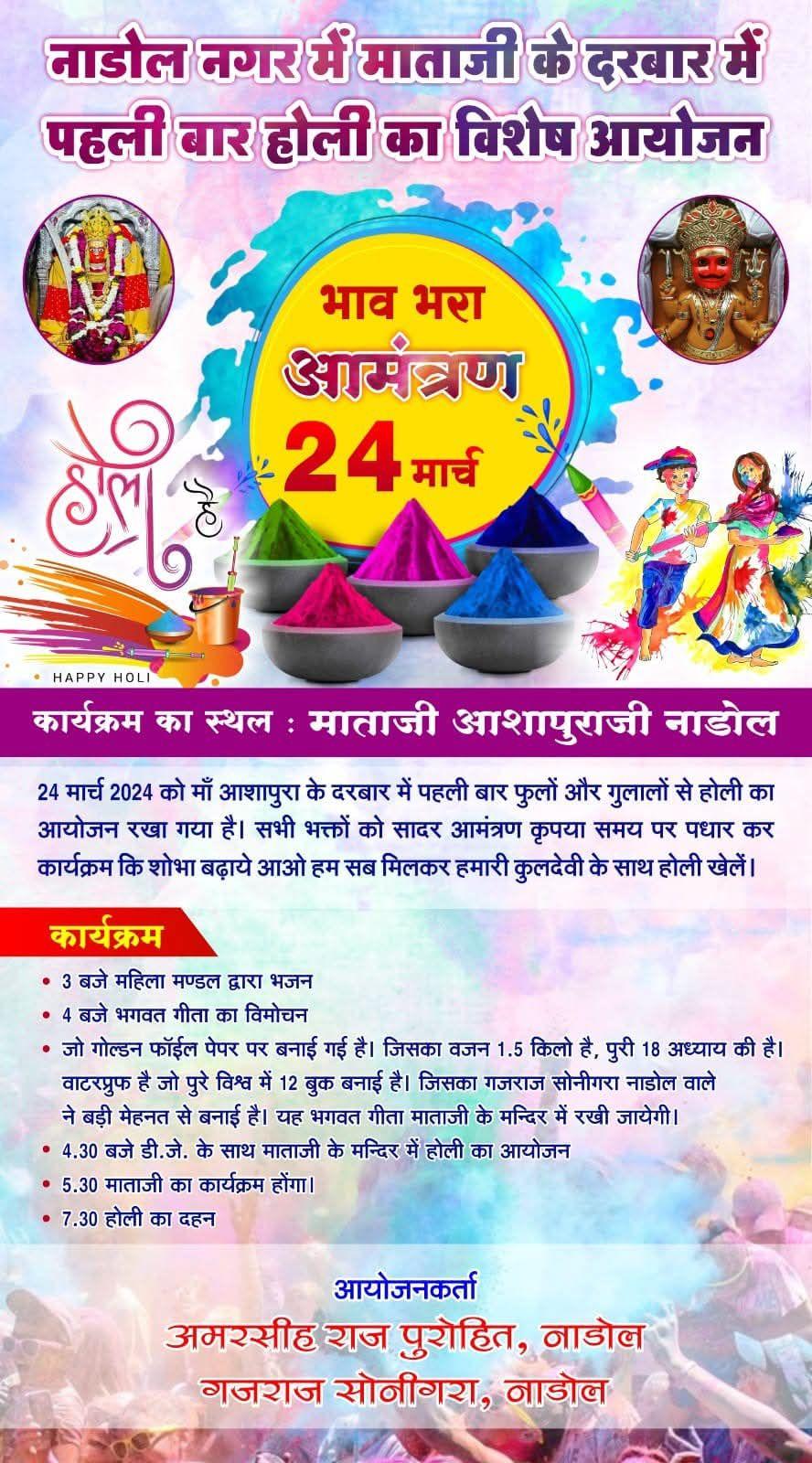
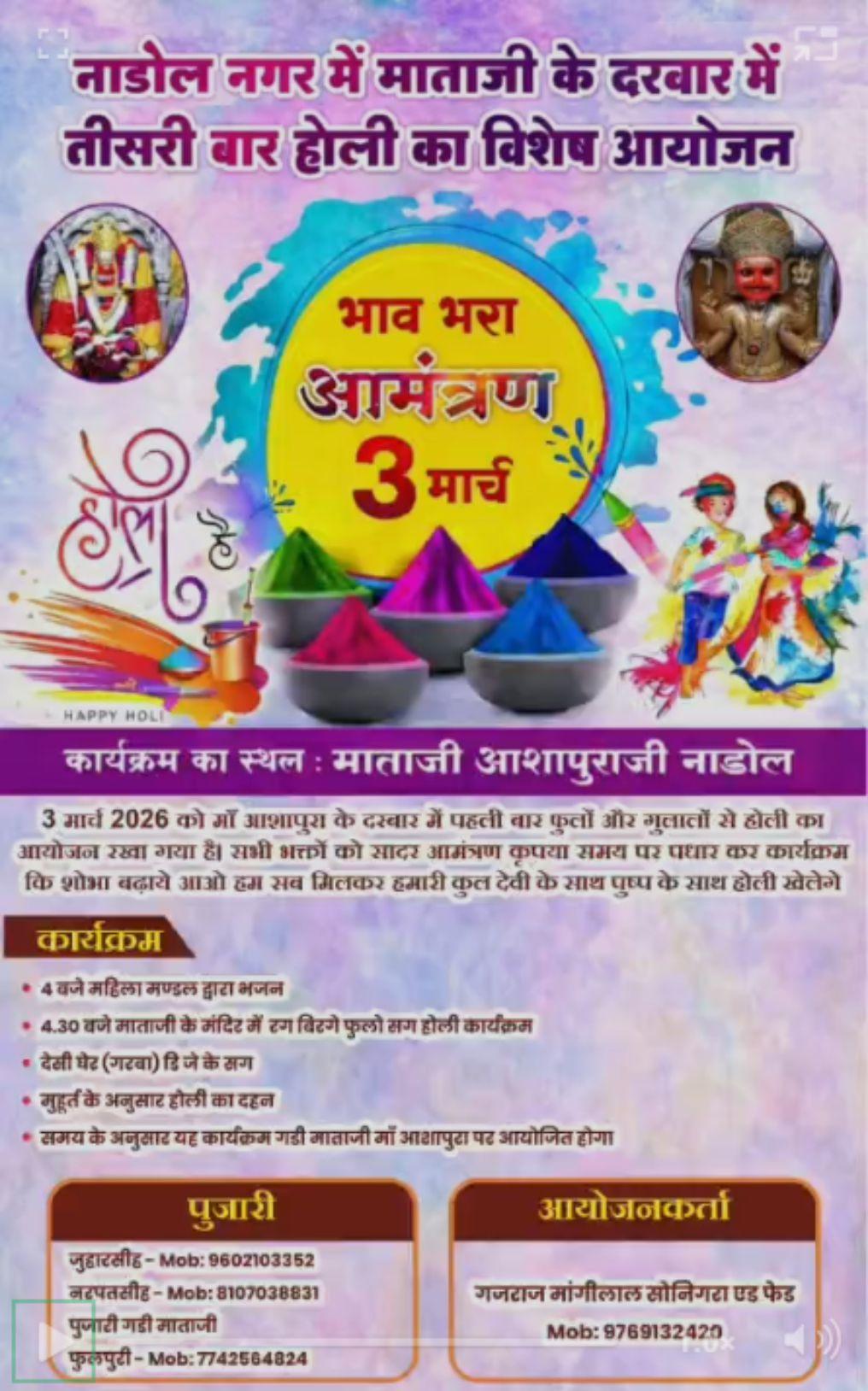
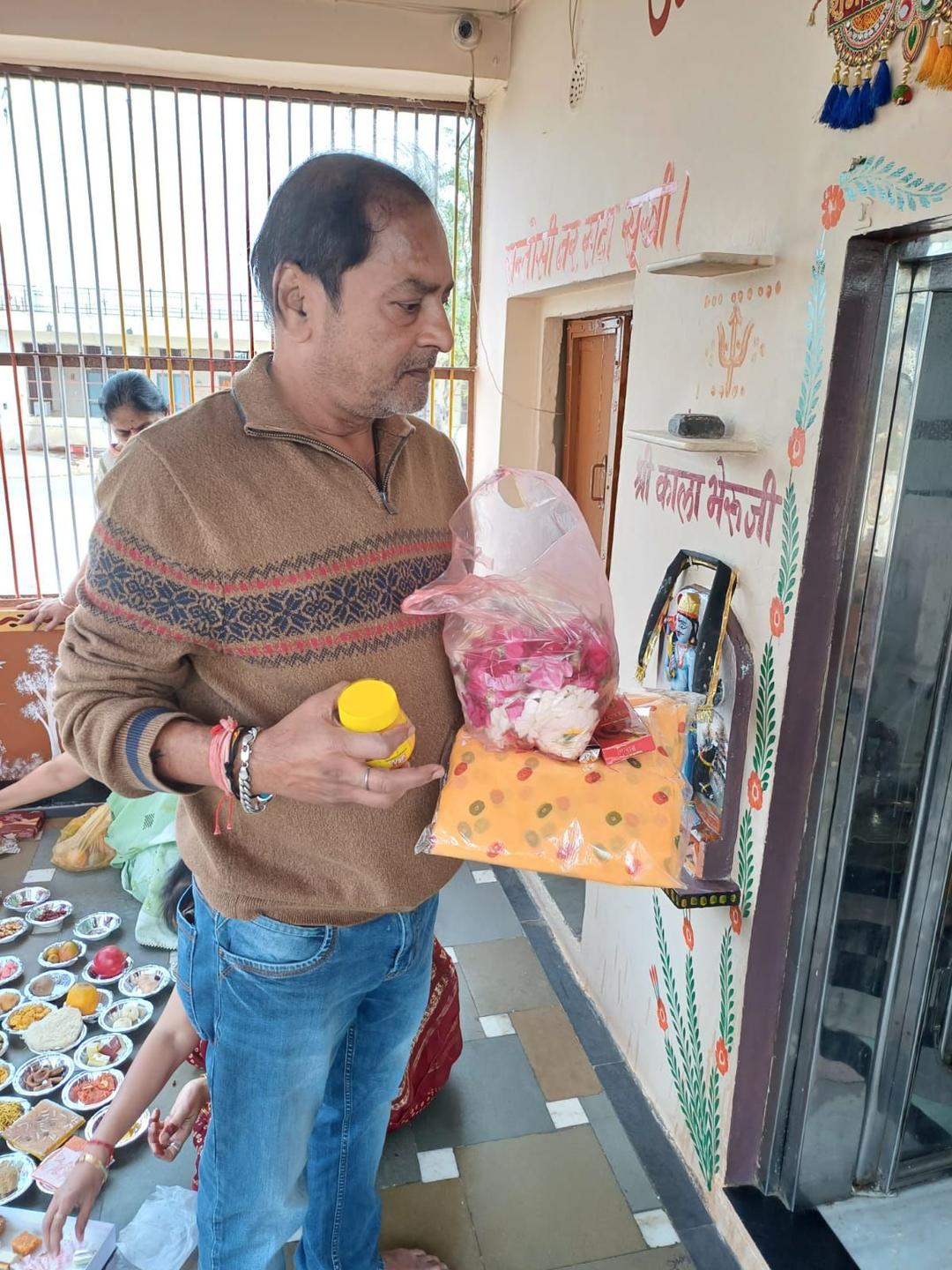
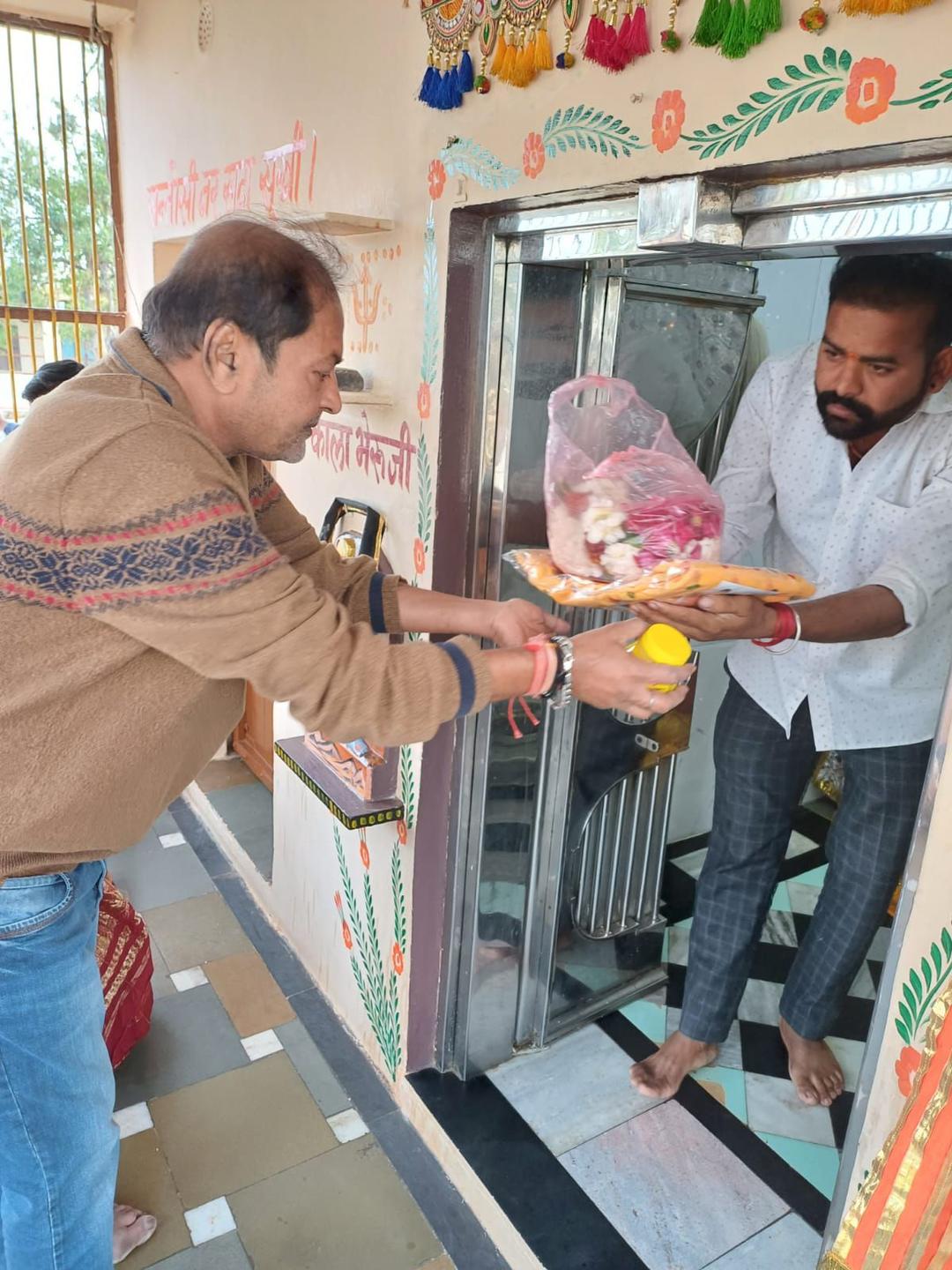
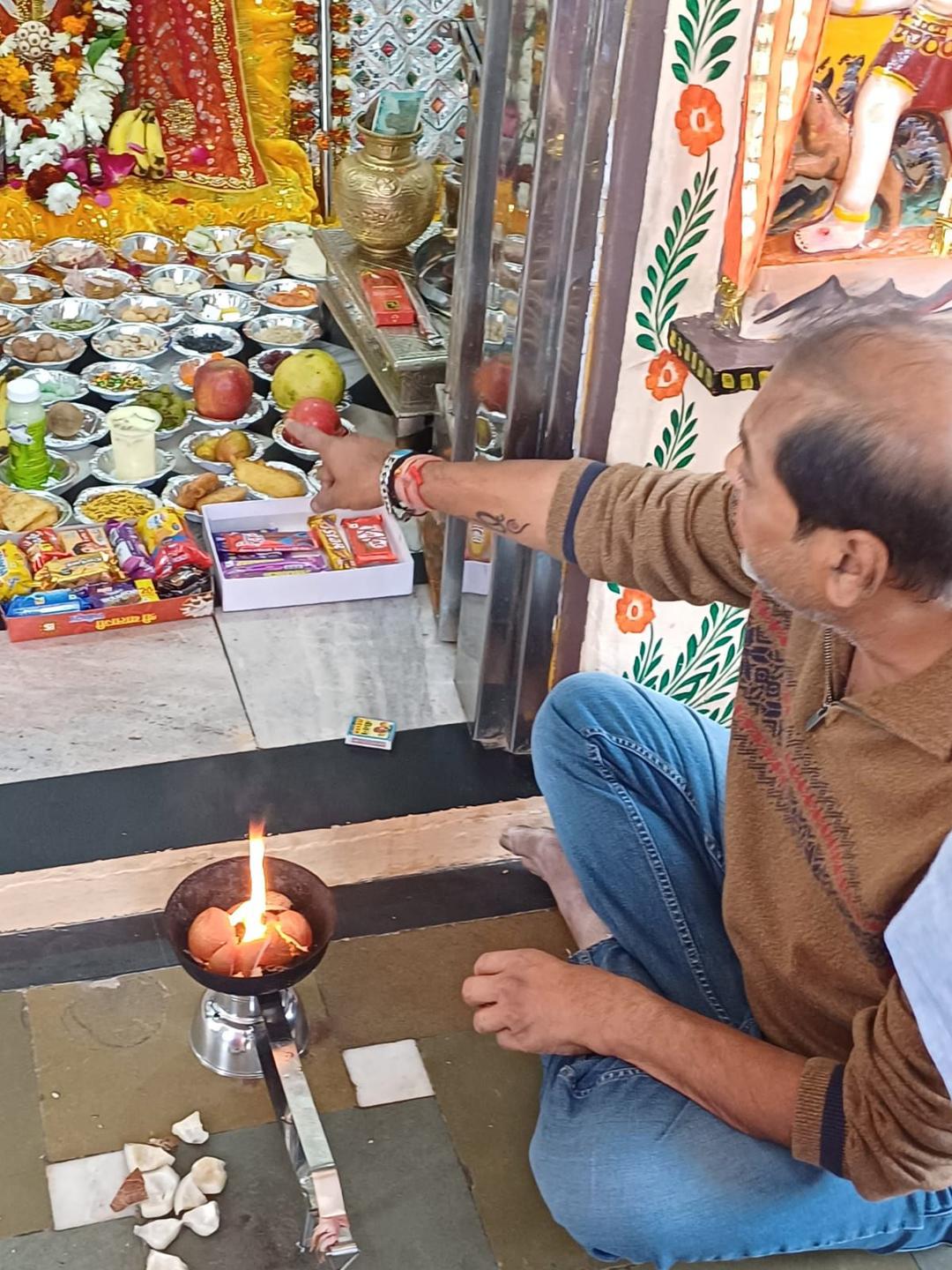
Perched on the fort in Nadol, the temple of Maa Ashapura is a deeply miraculous center of faith. Bhajan-kirtan sessions are held here every Purnima (full moon).
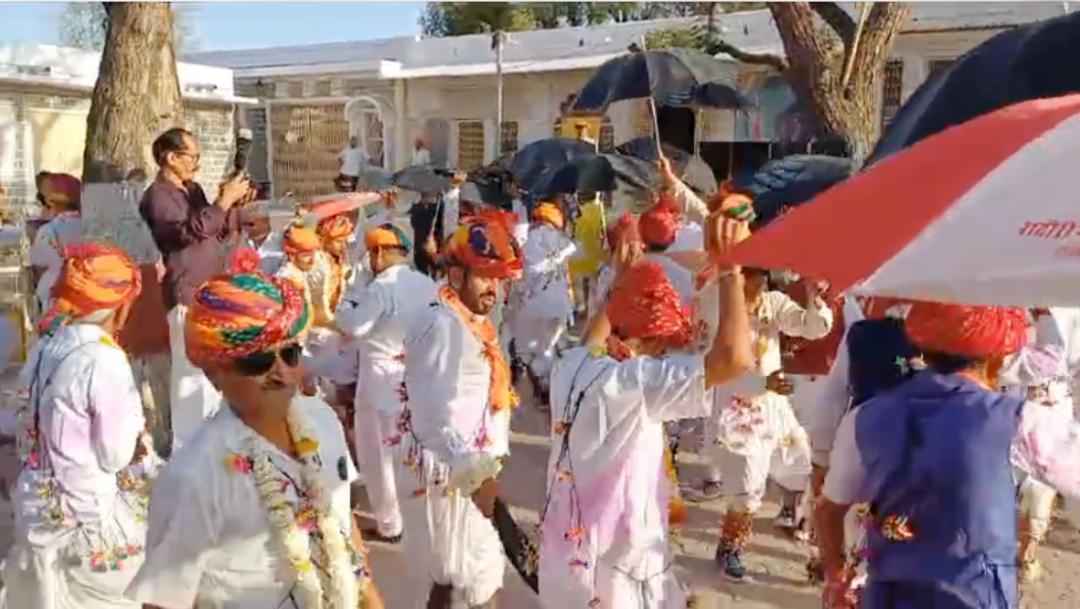
During the Sharad Navratri festival, Garba festivities buzz continuously for all nine days. People from nearby areas wear various traditional attire and dance to the beats of the DJ, which is the main attraction. This grand festival is organized and celebrated with great fervor by Dinesh Kumar Lalchand Ji Jain and his entire family.
Nadol is known as the "City of Religion" because it is graced by many prominent and ancient temples:
Nadol is home to four principal Jain temples. Most notably, the world's only temple dedicated to Gurudev Mandev Suri Maharaj Saheb is situated here.
Gurupurnima, Paryushan Parv, and the Guru Mela are celebrated with immense enthusiasm on this sacred land. The unity and brotherhood among the people here serve as an exemplary model for society. Recognized as a major pilgrimage center (Panch Tirth), this village is renowned worldwide.
Hailing from Nadol village, Gurudev Rupmuni Ji was a globally renowned and revered spiritual leader. Two large Dharmashalas (rest houses) have been established in his name in Nadol, which also provide excellent food arrangements for pilgrims and visitors. This is truly why this sacred land is affectionately called the 'City of Religion.'
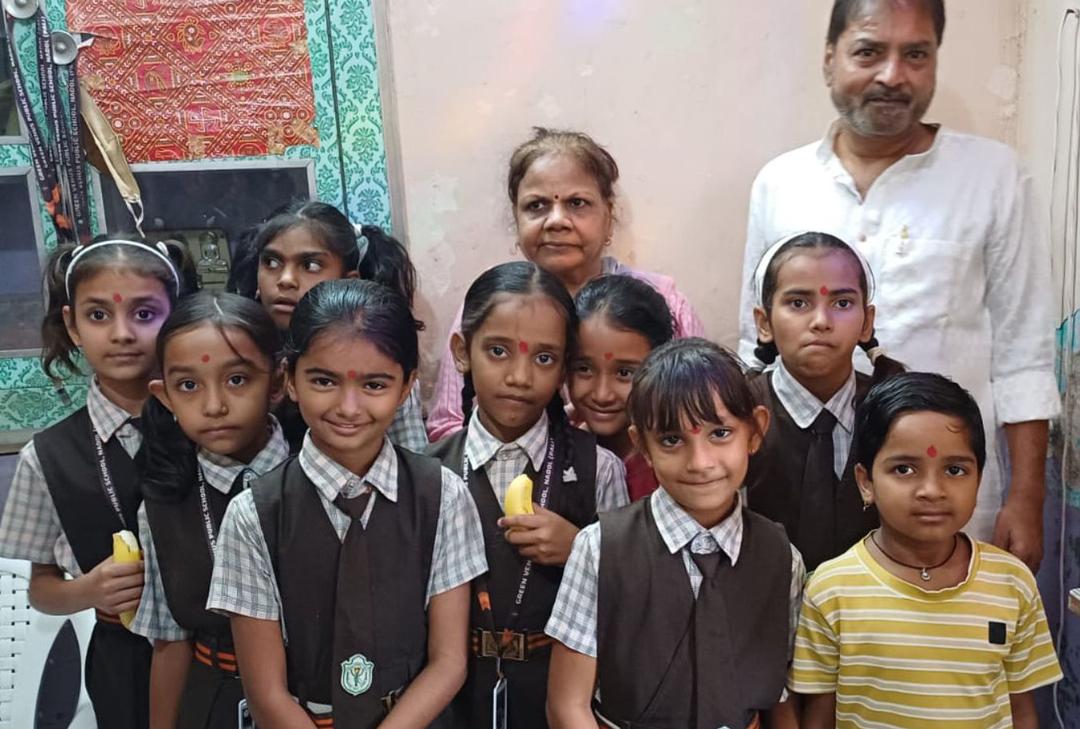
OUR LIVING HERITAGE
From Rao Lakshman's arrival to the sacred establishment of Maa Ashapura's seat, Nadol continues to stand as a living reminder of devotion, sacrifice, royal lineage and divine grace.